Quick Answer
If you are looking for the best Cho build in HOTS and how to actually make Cho'gall work, this guide breaks it down in a practical, real-match way. Cho is the frontline half of Heroes of the Storm's unique two-player tank-bruiser duo, built to take space, create chaos, and survive long enough for Gall to turn that chaos into damage.
This guide covers the best Cho build, gameplay tips, and real-match decision making to help you win more games.
Cho is a special case because you are never really playing alone. Good Cho play is not just about your own movement and cooldowns. It is about syncing with Gall, understanding when the duo can commit, and making sure your giant health bar is creating real value instead of just soaking random damage.
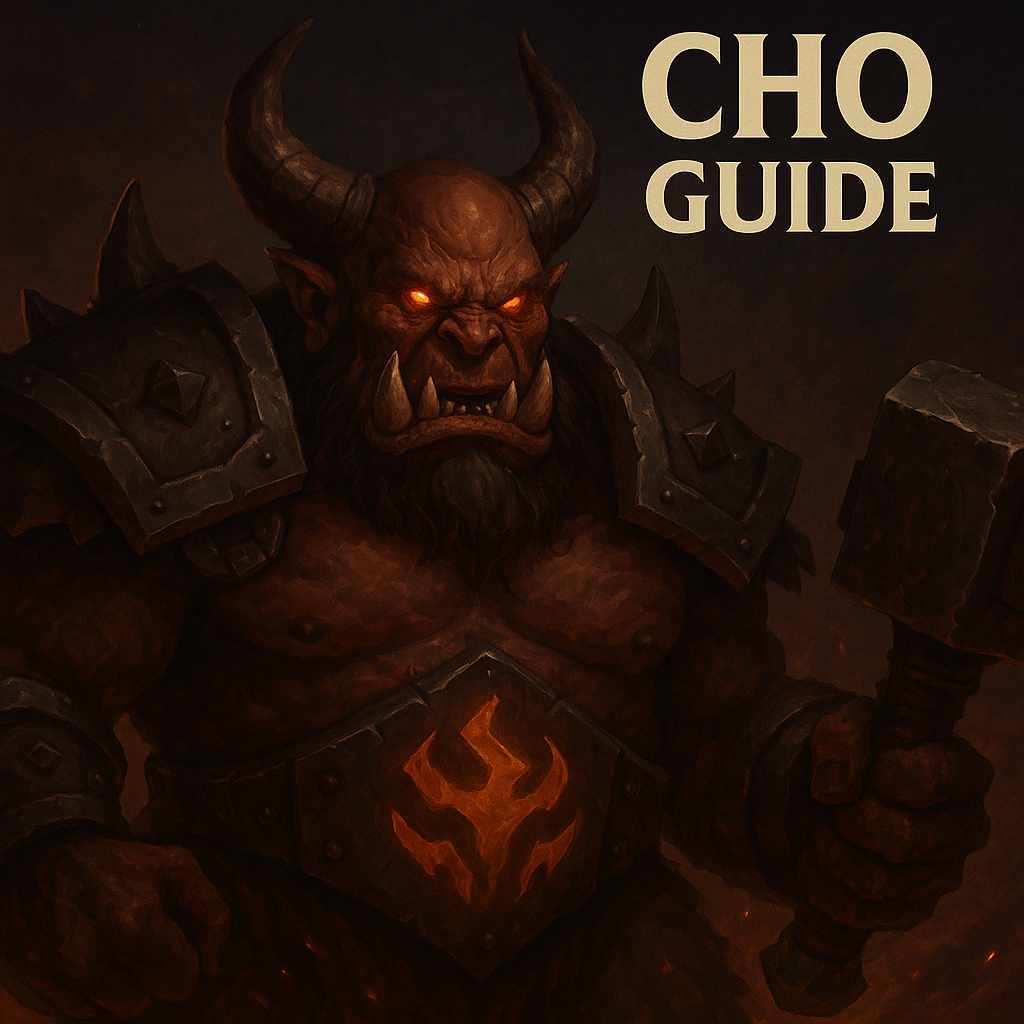
Hero Identity and Role Breakdown
Cho is part tank, part bruiser, and part delivery system for Gall's damage. His value comes from being huge, disruptive, and difficult to ignore while the duo's real damage work happens from the second head. That makes him feel different from every normal tank in the game.
He can be terrifying when the duo is coordinated and the enemy does not have good answers to sustained pressure. He also becomes much weaker if the two heads are not making the same decision. More than most heroes, Cho rewards shared timing and mutual trust.
Cho Abilities Explained
Ogre Hide (Trait) gives armor when crowd controlled, which helps the duo survive burst windows. Surging Fist (Q) gives engage pressure and displacement. Consuming Blaze (W) adds damage and sustain. Rune Bomb / Runic Blast interactions belong to the duo's combined control and damage pattern. Upheaval gives big setup by pulling enemies together, while Twisting Nether turns Cho'gall into a huge area threat during committed fights.
How to Play Cho (Step-by-Step)
- Decide with your Gall whether the next fight is about engage, counter engage, or simply holding space.
- Use your large body to control where enemies are willing to stand.
- Only commit deep when Gall is fully ready to capitalize.
- Treat Surging Fist as setup, not random movement.
- Respect that every bad engage on Cho'gall costs two heroes, not one.
How to Play Cho Effectively
The most important thing on Cho is understanding that you are the duo's steering wheel. If your movement is reckless, the whole hero feels awful. If your positioning is calm and intentional, Gall suddenly gets to play from much better angles. Cho is not about running at people nonstop. He is about moving the fight somewhere your two-player body becomes a real advantage. When Cho is played well, the enemy team starts feeling like the whole battlefield has gotten smaller. Safe angles disappear, retreat paths get awkward, and one bad step can suddenly turn into a full collapse.
Because the duo is so large and so obvious, patient engagement matters even more than usual. A lot of bad Cho games come from trying to prove toughness instead of asking whether the next step actually creates value. If Gall is not ready, if the enemy still has key cooldowns, or if the fight is in terrible terrain, you often need to wait. That patience is not passive. It is what lets Cho'gall hit with real force instead of waddling into five people and hoping raw health is enough. A good Cho engage does more than start a fight. It drags the enemy into a fight they were not ready to take, and that wins games by itself.
Upheaval is the more setup-heavy heroic and rewards coordinated follow-up. Twisting Nether gives raw brawl pressure and helps in tighter, longer fights. If you are newer to the duo, keep the rule simple: pick the heroic that makes Gall's job easier, not the one that sounds cooler in a vacuum. Mastering this mindset alone will already make you more impactful than most Cho players.
Best Cho Builds (Level 1 to 20)
Consuming Fire at level 1, Rollback at level 4, Power Surge at level 7, Upheaval at level 10, Runic Feedback at level 13, Twilight Veil at level 16, and Favor of the Old Gods at level 20.
Gameplay Focus - Control and Setup Frontline
This build leans into Cho as a fight-shaping frontline that drags enemies into uncomfortable space and sets Gall up to cash in. It is strongest when your duo wants structured control instead of blind brawling. This is the version of Cho that makes enemy backliners nervous before the real commit even happens, because every step forward starts to feel like it could become an Upheaval trap.
What makes this build so strong in real matches is that it gives the duo a cleaner script. Consuming Fire and Power Surge help you keep pressure high while still threatening a real moment of commitment, and Upheaval turns decent positioning mistakes into catastrophic ones. Once Runic Feedback and Twilight Veil come online, Cho starts feeling much harder to burn through during the exact windows where the enemy team most wants to punish him. That combination creates the kind of frontline pressure that does not just absorb space. It actively steals it.
This is the build that wins fights by forcing grouped enemies to panic at the same time. If your team has follow-up damage and your Gall is ready, one clean pull can instantly swing the whole fight from awkward poke into full control. On objective maps where teams naturally bunch up, it feels brutal in exactly the way Cho should feel brutal.
In short, this build is best when your team wants coordinated setup, the enemy has limited room to spread, and you trust your duo communication enough to punish one mistake hard.
Alternative Cho Build (Level 1 to 20)
Fuel for the Flame at level 1, Seared Flesh at level 4, Enraged Regeneration at level 7, Twisting Nether at level 10, Surge of Stamina at level 13, Molten Block at level 16, and The Will of Cho at level 20.
Gameplay Focus - Sustained Brawl Monster
This version of Cho'gall is more about surviving and grinding value across a long ugly fight. If the map or draft is pushing everyone into extended frontline combat, this build can feel oppressive. It is the build that makes the duo feel less like a combo piece and more like a siege engine that keeps walking at you until something breaks.
In real games, this path shines when fights do not end cleanly on first contact. Fuel for the Flame and Seared Flesh add steady pressure, Enraged Regeneration and Surge of Stamina make the body much harder to finish, and Twisting Nether gives you a huge threat button once everyone is trapped in melee range. By the time Molten Block and The Will of Cho are in play, the duo can survive ridiculous amounts of punishment if you choose your commit windows well. That endurance changes the texture of the fight. Enemies stop thinking about killing Cho fast and start wondering whether they can get away at all.
This is the build that wins fights by outlasting the enemy plan and then crashing over the top of it. It is especially nasty into teams that need a clean burst sequence or want to slowly kite backward, because Cho keeps turning those neat ideas into a messy close-range brawl where Gall gets to free-cast.
In short, this build is best when the duo expects long objective fights, the enemy wants sustained trading, and you want more staying power than setup finesse.
Real Match Situations
Your Gall is ready to unload, but the enemy still has all their disengage tools. Waiting one more beat is often the real skill check. If Cho commits too early, the whole duo pays for it.
The enemy team spreads perfectly and gives you no Upheaval dream. That does not mean you force it. Sometimes Cho wins by being an awful body to walk through while Gall chips people down.
You survive the first burst, but the fight still looks chaotic. This is where Cho'gall often becomes scary, because once the duo gets past the first punish window, their sustained presence can take over.
One Thing to Know
Cho is not just a tank. He is the half of a two-player machine that only feels strong when both halves commit to the same moment.
What Changes Through the Match
Early game Cho'gall is about surviving lane phases and taking smart fights, not greedy ones. Mid game is where coordinated engages start feeling much more dangerous. Late game, the duo can become overwhelming if the enemy lacks clean answers, but the punishment for one bad engage also gets much harsher because two players go down together.
Advanced Tips
Let Gall's readiness decide your aggression. This sounds obvious, but it is the biggest separator between scary Cho'gall duos and clumsy ones. If Gall is not in rhythm, if cooldowns are not ready, or if he is stuck casting into bad angles, your engage will feel heavy and late no matter how brave it looks. The best Cho players do not just ask whether they can go in. They ask whether Gall can instantly turn that movement into meaningful damage, and that timing is what makes the whole hero feel unfair.
Space control is part of your damage. Cho does not need to land a flashy combo every few seconds to be winning. If your positioning cuts the fight in half, forces squishies off safe ground, or pins the enemy tank in a place Gall can punish, you are already generating pressure. In real matches, a lot of Cho'gall kills happen because the duo made the map feel too cramped, not because one button looked spectacular.
Do not take every brawl just because Cho'gall looks tanky. The health bar lies to a lot of players. Yes, the duo can absorb a ton, but bad fights still collapse fast when you walk into anti-tank tools, blinds, healing reduction, or layered control. The powerful Cho mindset is knowing when your size is an advantage and when it is simply making you easier to punish. Picking the right fight matters more on Cho than on most tanks because two players are tied to the same mistake.
Your best engage is often the one that gives Gall the cleanest spell window. A mediocre engage that lines up Gall's damage can be far better than a dramatic charge that strands the duo in nonsense. Look for moments where enemies are funneled by terrain, distracted by your team, or stepping into each other. Those are the engages that turn Cho from a big body into a fight-winning delivery system for Gall's side of the kit.
Limitations
Cho'gall has obvious power, but he also has obvious constraints. He gives up map flexibility, depends on duo coordination more than any other hero setup in HOTS, and can be punished by drafts that kite well or pressure side lanes relentlessly. He is powerful when the game lets the duo fight on their terms, but much less comfortable when the whole map is asking them to split or scramble.
FAQ
Is Cho good in solo queue? Only if you trust the Gall player. The hero pair is much better with clear communication.
When should I take Upheaval over Twisting Nether? Take Upheaval when your duo wants better setup. Take Twisting Nether when you want stronger brawling pressure.
Can Cho'gall work without a coordinated duo? Sometimes, but it is much less reliable.
Why do I feel useless when I survive forever? Because survival without useful positioning does not create real pressure.
What improves Cho the fastest? Better shared timing with Gall.
Related Guides
If you enjoy heavy frontliners with strong commitment windows, also check our Diablo guide, Garrosh guide, and Stitches guide.
Final Thoughts
Cho is one of the weirdest and most rewarding tank-style heroes in HOTS when duo coordination clicks. If you master these fundamentals, Cho becomes the kind of frontline problem enemy teams hate trying to solve.