Quick Answer
Deathwing is a raid-boss bruiser who controls space with huge damage, form choices, and permanent Unstoppable. This guide covers the best Deathwing build, practical gameplay tips, and real-match decisions that matter when you actually want to win with the hero.
If you want a bruiser that changes how the whole enemy team positions, Deathwing is still one of the most warping picks in the game.
Deathwing does not win through subtle tempo. He wins by making key zones dangerous and by forcing the enemy to think about his angle before the fight even starts.
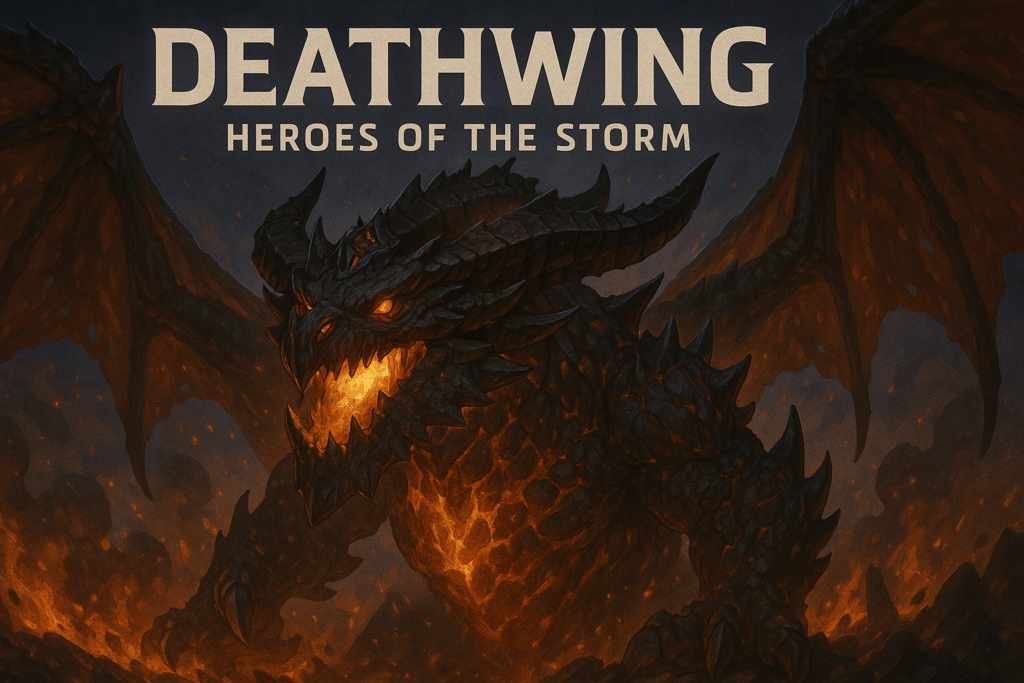
Hero Identity and Role Breakdown
Deathwing does not win through subtle tempo. He wins by making key zones dangerous and by forcing the enemy to think about his angle before the fight even starts.
The hero is strongest when played with patience. If you spend forms and big casts carelessly, the permanent Unstoppable stops feeling oppressive and starts feeling clumsy.
Deathwing Abilities Explained
Molten Flame controls lanes and chokes from range, while Incinerate and Lava Burst punish anyone who stays too close for too long. Dragonflight is not just travel; it is how Deathwing resets armor plates and chooses the next angle. Bellowing Roar breaks momentum up close, and Cataclysm changes the shape of the whole fight the moment you land.
Form choice dictates your pressure pattern, your landing tools decide how much space the enemy loses, and the permanent Unstoppable is what lets Deathwing stay relevant where other bruisers would be displaced.
How to Play Deathwing (Step-by-Step)
- Pick the form that matches whether the next problem is range control or close brawling.
- Land where the enemy path gets worse, not where the fight already ended.
- Use your large hitbox to own space without eating free poke for no reason.
- Commit your biggest fire and landing tools to moments the enemy cannot leave cleanly.
- Treat every takeoff or landing as a map timing decision, not a reflex.
How to Play Deathwing Effectively
Deathwing is less about constant uptime and more about brutally high-value uptime. If he is present in the right place at the right time, the enemy has to give up enormous amounts of space.
His form management is the real skill check. One form is better for shaping distance, the other for punishing people who stayed too close for too long.
In objectives and choke fights, the hero gets much nastier because the enemy has fewer ways to avoid his larger zones of damage.
The practical rule is to stop thinking of him as a giant health bar and start thinking of him as a moving piece of terrain the enemy must route around.
Bad Deathwing players land because the button is up. Good Deathwing players land when there is nowhere comfortable left for the enemy team to stand.
In some games, Deathwing can feel slow or oddly low-impact on open ground - that's normal. He usually takes over only once the battleground compresses space enough that the enemy has to route around him instead of casually spreading out.
Best Deathwing Builds (Level 1 to 20)
This primary Deathwing build focuses on zone control, forced pathing, and huge objective presence so the enemy has to fight around your space before they can fight around your teammates.
Gameplay Focus - Zone Control Deathwing
Pick this when the map keeps forcing teams through tight areas and your job is to own those spaces.
The build pushes harder into the parts of Deathwing that make standing still feel impossible for the enemy.
It wins because every fixed objective or entrance becomes a problem they must solve through damage and positioning.
In short, this build is best when you want the cleanest version of Deathwing in the kinds of fights the hero already prefers.
This build looks overwhelming on paper, but it loses a lot on open ground where the enemy can spread, poke, and refuse the tight spaces your zones want.
Alternative Deathwing Build (Level 1 to 20)
Molten Blood at level 1, Infernus at level 4, Firestorm at level 7, Bellowing Roar at level 10, Wicked Inferno at level 13, Conflagration at level 16, Stood in the Fire at level 20
Gameplay Focus - Brawl Deathwing
Pick this when the enemy has to come closer and your team wants a bruiser who can keep punishing contact over time.
This path leans harder into close-range pressure and repeated frontline value.
It is stronger when the enemy cannot comfortably disengage from the zone you are creating.
In short, this build is best when the game asks Deathwing to solve a slightly different problem than the default path.
Common Player Mistake
Most Deathwing players fail here. They land for damage instead of landing for space, which makes the whole hero feel slower than he really is. In real matches, this is where Deathwing starts to take over: when the enemy team already occupies bad ground and now has even less room to leave it. If Johanna has already used Iron Skin or the team is stuck on point, that is your real Roar or Cataclysm window.
If you ever feel useless on Deathwing, it's usually because you're landing for damage when the fight really needed you to land for space.
Real Match Situations
The enemy is already set on point before you arrive. That is often where Deathwing's entrance matters most, because one correct landing can completely rewrite their setup.
You are taking free poke on the way into a fight. Even Deathwing should not donate health for no reason. Better timing is usually better damage.
The enemy team splits too far across a choke. That is the kind of shape Deathwing punishes extremely well because his area control grows in value as exits shrink.
One Thing to Know
Deathwing is strongest when he controls space first and damage second.
What Changes Through the Match
Early game Deathwing is mainly about safe lane value and showing up in the right place. Mid game is where his big zone tools start deciding objective entries. Late game, one correct landing or one perfectly timed form usage can decide the entire area the enemy is allowed to play in.
Advanced Tips
Land where the path is forced. Your arrival gets far stronger when the enemy cannot immediately spread back out.
Form choice is a real decision. If you pick the wrong pattern for the fight, the hero feels far slower and weaker than he actually is.
Permanent Unstoppable is not infinite permission. You still lose a lot if you trade health for no meaningful space.
Objective geometry is your friend. The tighter the map gets, the more your presence alone changes the fight.
Limitations
Deathwing is terrifying in the right zone fights, but ranged poke, disciplined spread, and poorly timed entries can make him feel much more manageable. He is powerful when space is compressed and much weaker when the enemy can stay loose and patient.
FAQ
When should I pick Deathwing? Pick Deathwing when your draft wants huge area control and the battleground rewards punishing fixed objective setups.
Is Deathwing good in solo queue? Yes, especially when you play for repeatable value instead of highlight moments. The hero gets much stronger once you solve real map and fight problems instead of pressing buttons just to stay active.
When should I take Bellowing Roar over Cataclysm? Take Bellowing Roar when the fight is about peeling, interrupting momentum, and making close-range commits collapse. Take Cataclysm when you want a stronger entrance, better rotation pressure, and a heroic that can split or zone several heroes at once.
What is the biggest mistake on Deathwing? The biggest mistake is treating every landing like a free engage instead of asking whether the enemy actually has to stay there.
What habit improves Deathwing the fastest? The fastest improvement is getting better at reading where the enemy wants to exit before you commit your presence.
Related Guides
If you enjoy bruisers that take over games in different ways, also check our Imperius guide, Gazlowe guide, and Chen guide.
Final Thoughts
Deathwing is strongest when the game is asking exactly the kind of question this hero is built to answer. If you master these fundamentals, Deathwing becomes one of the most useful bruisers in Heroes of the Storm.