Quick Answer
Dehaka is a global bruiser who wins through drag picks, side-lane pressure, and map timing. This guide covers the best Dehaka build, practical gameplay tips, and real-match decisions that matter when you actually want to win with the hero.
If you want a bruiser that creates value before the fight even starts, Dehaka is one of the cleanest macro picks in HOTS.
Dehaka is not just an offlaner with a global. He is a tempo hero. If your lane pressure and brush position are correct, the enemy has to guess whether they are about to lose a wave, a camp, or a backline target.
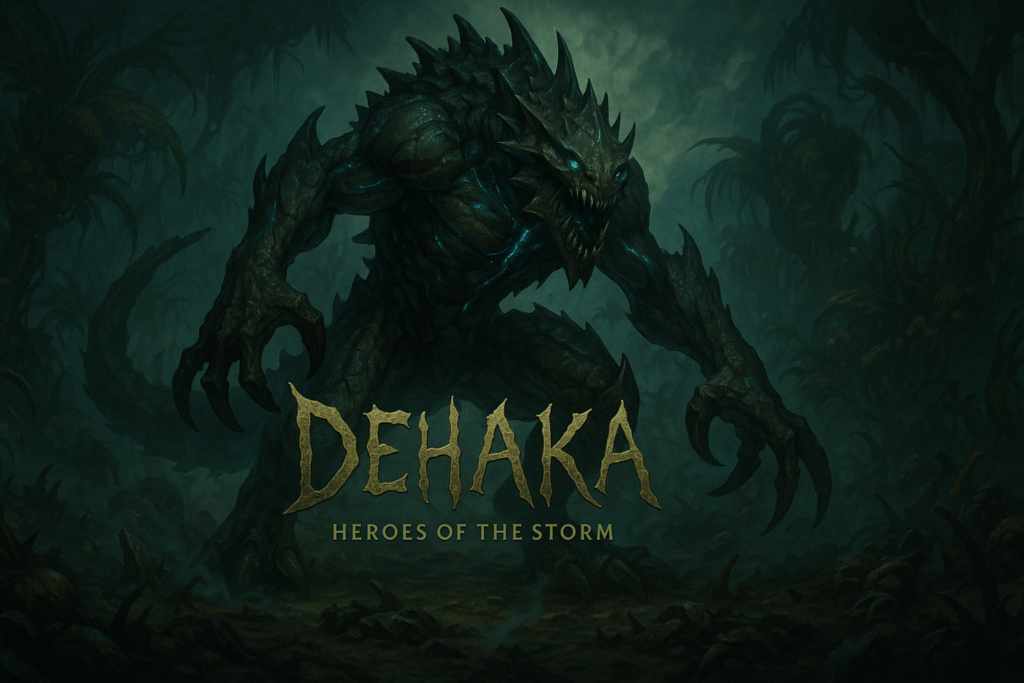
Hero Identity and Role Breakdown
Dehaka is not just an offlaner with a global. He is a tempo hero. If your lane pressure and brush position are correct, the enemy has to guess whether they are about to lose a wave, a camp, or a backline target.
The hero rewards map reads more than flashy mechanics. A slightly better brush path or a slightly earlier global often matters more than a fancy tongue angle.
Dehaka Abilities Explained
Tissue Regeneration (Trait – D) Rapidly heal when out of combat, with healing increased by collecting essence. Drag (Q) Pull target enemy to you, dealing damage and stunning for 0.75 seconds. Dark Swarm (W) Gain 40% movement speed and 50 spell armor for 3 seconds. Burrow (E) Burrow underground, becoming unstoppable and unrevealable, then emerge for damage. Isolation (R1) Silence target for 3 seconds and reduce their damage by 50%. Adaptation (R2) Become unstoppable and immune to all disabling effects for 4 seconds.
Drag is the pick tool, Burrow is what buys you time once you commit, and Brushstalker is the reason Dehaka can turn one offlane decision into map-wide pressure.
How to Play Dehaka (Step-by-Step)
- Own the solo lane first so your global actually creates a lead instead of fixing a deficit.
- Sit in vision-denying spots when the next skirmish is likely.
- Use Drag when the target cannot safely sidestep or peel immediately.
- Burrow only when it truly denies damage or buys time for your team to arrive.
- Global early enough that your team fights 5v4 instead of barely on time.
How to Play Dehaka Effectively
Dehaka wins lane by being difficult to force out and by threatening brush control every time the enemy overextends.
In real matches, the biggest Dehaka value often comes from arriving first to a fight that looked even on the minimap. Brushstalker turns rotation mistakes into numbers advantages.
His teamfight pattern is very simple when played well: find the isolated angle, drag the right target, then survive long enough for the pick to become permanent.
The key mindset is to think twenty seconds ahead. Dehaka often looks weak when played reactively and amazing when the next rotation was already planned.
Dehaka is one of those heroes who can look quiet for 30 seconds and then decide the whole map with one brush flank. If you force action too early, you miss the part of the kit that actually scares people.
In some games, Dehaka can feel strangely quiet early, especially if lanes stay honest and nobody overextends - that's normal. His real impact often arrives the first time a global flank lands at the exact moment the enemy thought the fight was still even.
Best Dehaka Builds (Level 1 to 20)
This primary Dehaka build is about global pressure, cleaner Isolation windows, and punishing side-lane greed so one good flank can create a numbers edge your team actually converts.
Gameplay Focus - Global Pick Control
Pick this when you want maximum map impact and the enemy comp has targets that panic once Dehaka reaches them.
The build is about cleaner drags, better survival after entry, and more reliable value every time your global changes the numbers.
It wins games by turning lane pressure into actual kill pressure instead of just passive soak.
In short, this build is best when you want the cleanest version of Dehaka in the kinds of fights the hero already prefers.
This build looks excellent on paper, but it drops off fast if you cannot find real flank angles or your team is too late to punish the pick you created.
Alternative Dehaka Build (Level 1 to 20)
Tissue Regeneration at level 1, One-Who-Collects at level 4, Feeding Frenzy at level 7, Isolation at level 10, Primal Rage at level 13, Elongated Tongue at level 16, Contagion at level 20
Gameplay Focus - Brawl Dehaka
Pick this when you expect repeated objective fights and need Dehaka to hold the front line longer.
This path gives up a little surgical feel and leans harder into staying power, repeated disruption, and ugly multi-target fights.
It is better when the enemy cannot avoid long brawls and your team wants a bruiser who keeps standing there.
In short, this build is best when the game asks Dehaka to solve a slightly different problem than the default path.
Common Player Mistake
Most Dehaka players fail here. They burrow into the first fight they see instead of the fight that actually gives them a flank. In real matches, this is where Dehaka starts to take over: when the enemy has already committed to one direction and cannot turn back cleanly. If E.T.C. slides past your team or a backliner drifts too close to a wall, that is your real Drag window.
If you ever feel useless on Dehaka, it's usually because you're joining the fight too honestly instead of arriving from the angle that makes Drag scary.
Real Match Situations
Your team starts an objective 4v5 while you are still in lane. This is only good if your global timing is planned. If you arrive early, Dehaka turns map greed into a clean numbers play.
An enemy ranged hero walks near brush without support vision. That is where Dehaka gets paid. The drag threat alone often changes the whole rotation path.
The enemy sends two heroes to match your lane. That is already value if your team uses the opposite side of the map correctly.
One Thing to Know
Dehaka wins plenty of fights without arriving first, because his global pressure changes what the enemy is allowed to do.
What Changes Through the Match
Early game Dehaka is mostly about lane control and brush threat. Mid game is where Brushstalker starts warping rotations. Late game, one correct global and one clean drag can end the match outright, so map timing becomes more important than raw mechanics.
Advanced Tips
Do not show in lane longer than necessary. The less certain the enemy is about your exact location, the more value your global threat has.
Drag the target your team can actually finish. The flashy drag means very little if the follow-up hits the wrong hero.
Burrow after resources are committed. The ability is strongest when it erases the damage window the enemy was counting on.
Brush control is part of your damage. If the enemy has to respect a bush, they are already giving up better movement and better spacing.
Limitations
Dehaka is outstanding when the map gives him time to build pressure, but nonstop forced fighting can reduce some of that edge. He also looks far weaker when Brushstalker timings are late, because then you are just a decent bruiser instead of a tempo problem.
FAQ
When should I pick Dehaka? Pick Dehaka when your draft wants global pressure, strong offlane presence, and pick threat from fog or brush.
Is Dehaka good in solo queue? Yes, especially when you play for repeatable value instead of highlight moments. The hero gets much stronger once you solve real map and fight problems instead of pressing buttons just to stay active.
When should I take Isolation over Adaptation? Take Isolation when you want cleaner pick pressure and more direct backline punishment. Take Adaptation when the fight is more about surviving the commit, buying time, and staying useful through the enemy burst cycle.
What is the biggest mistake on Dehaka? The biggest mistake is using global reactively so often that the enemy never actually gets punished for your macro advantage.
What habit improves Dehaka the fastest? The fastest improvement is planning your next global before the minimap becomes urgent.
Related Guides
If you enjoy bruisers that take over games in different ways, also check our Sonya guide, Thrall guide, and Varian guide.
Final Thoughts
Dehaka is strongest when the game is asking exactly the kind of question this hero is built to answer. If you master these fundamentals, Dehaka becomes one of the most useful bruisers in Heroes of the Storm.