Quick Answer
Gazlowe is a setup bruiser who wins through scrap pressure, zone control, and brutal objective fights. This guide covers the best Gazlowe build, practical gameplay tips, and real-match decisions that matter when you actually want to win with the hero.
If you want a bruiser that turns objective space into a construction site the enemy hates walking through, Gazlowe is still a nightmare to deal with.
Gazlowe is all about preparation. He gets much stronger when his setup is already on the ground before the enemy fully commits.
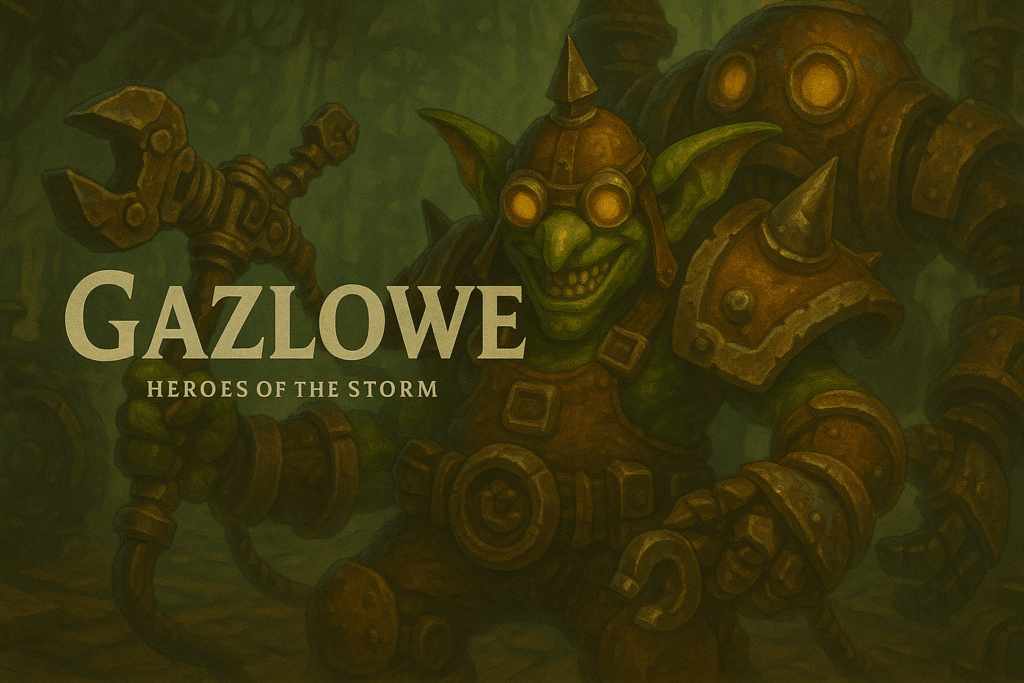
Hero Identity and Role Breakdown
Gazlowe is all about preparation. He gets much stronger when his setup is already on the ground before the enemy fully commits.
That makes him feel incredible in planned fights and mediocre in panic fights. The difference is often whether the scrap economy and turret timing were ready first.
Gazlowe Abilities Explained
Salvager (Trait – D) Collecting scrap from minions, structures, and heroes reduces ability cooldowns by 2 seconds. Deth Lazor (Q) Charges up a laser beam that deals increasing damage the longer it's channeled. Rock-It! Turret (W) Deploys a turret that attacks nearby enemies automatically. Xplodium Charge (E) Places a delayed explosive that can be detonated early for reduced damage. Grav-O-Bomb 3000 (R1) After a delay, pulls all enemies in a large area toward the center. Robo-Goblin (R2) Transforms Gazlowe, granting attack speed, armor, and making him Unstoppable.
Turrets shape the zone, scrap keeps your tempo alive, and the combo tools are what turn a controlled area into a real punish window.
How to Play Gazlowe (Step-by-Step)
- Set up where the next fight is likely instead of where the last one happened.
- Use turrets to shape movement, not just to pad damage.
- Collect scrap with purpose so your next cooldown cycle arrives on time.
- Hold your big combo until the enemy is actually trapped in your area.
- Respect that Gazlowe is strongest when he gets to pre-build the problem.
How to Play Gazlowe Effectively
In lane and rotations, Gazlowe gets value by clearing fast and turning scrap into the next setup before the enemy is ready for it.
At objectives, his power spikes hard because the fight often comes to him. Turrets, bombs, and scrap all look much better when the enemy has to enter a fixed zone.
His best games feel unfair because opponents are fighting both your hero and the area you prepared ahead of time.
The practical rule is simple: if your setup is late, you are usually playing a weaker version of the hero.
In some games, Gazlowe can feel like he is always half a second too early or too late - that's normal. He gets much scarier once objectives and rotations start happening inside zones he had time to prepare instead of fights that appear out of nowhere.
Best Gazlowe Builds (Level 1 to 20)
This primary Gazlowe build turns every setup into turret pressure, bomb threat, and Grav-O-Bomb control that punishes clumped teams hard the moment they stop respecting your zone.
Gameplay Focus - Objective Trap Gazlowe
Pick this when the map keeps forcing teams into one area and you can prepare before they arrive.
The build is about stronger setups, cleaner zoning, and objective control that feels miserable to walk into.
It wins because the enemy starts each important fight already behind on space.
In short, this build is best when you want the cleanest version of Gazlowe in the kinds of fights the hero already prefers.
This build looks nasty on paper, but it falls apart if fights keep starting away from your setup and nobody is forced to stay in the area you prepared.
Gazlowe looks goofy until the fight starts happening exactly where he wanted it to happen. That is when the hero stops feeling cute and starts feeling oppressive.
Alternative Gazlowe Build (Level 1 to 20)
Rocket Boots at level 1, Hyperfocus Coils at level 4, Overload at level 7, Grav-O-Bomb 3000 at level 10, Overcharged Capacitors at level 13, Ark Reaktor at level 16, Bomb Toss at level 20
Gameplay Focus - Brawl Gazlowe
Pick this when the enemy has to keep walking into you and the fight is likely to stay in one place for a while.
This version leans harder into sustained threat and repeated punish once people are already nearby.
It is stronger when one clean combo is not enough and the area needs to stay hostile afterward.
In short, this build is best when the game asks Gazlowe to solve a slightly different problem than the default path.
Common Player Mistake
Most Gazlowe players fail here. They throw bombs at people instead of building a zone the fight has to pass through. In real matches, this is where Gazlowe starts to take over: when the objective starts and the enemy still has to stand near your setup. If Diablo commits past your turrets or the enemy team clumps around a channel, that is your real Grav-O-Bomb window.
If you ever feel useless on Gazlowe, it's usually because the fight started outside the zone you prepared and you stayed committed to the wrong setup.
Real Match Situations
Your team gets to objective first. That is often where Gazlowe looks strongest, because the setup can already be waiting by the time the enemy shows up.
The fight starts before your zone is ready. That usually means you need to buy time and reset the area instead of pretending Gazlowe is a raw reaction bruiser.
A choke forces the enemy through the same angle twice. That is exactly the kind of repetition Gazlowe punishes best.
One Thing to Know
Gazlowe wins when the enemy has to walk through your work to play the game.
What Changes Through the Match
Early game Gazlowe is mostly wave control and scrap economy. Mid game is where setup quality starts deciding objective entries. Late game, one good prepared area can make the enemy either give up space or take a fight on terrible terms.
Advanced Tips
Turrets are about shape, not vanity. Place them where movement gets worse for the enemy, not just where raw damage looks pretty.
Scrap is tempo. If you manage it well, Gazlowe reaches the next setup window before the enemy expects it.
Your combo wants commitment. The punish gets much better once the enemy has already stepped into the bad space.
Do not force panic fights. Gazlowe usually wants the fight that arrives a second later, after the setup is ready.
Limitations
Gazlowe can feel oppressive when the map gives him preparation time, but highly mobile comps and fights that start too suddenly can strip away a lot of his comfort. He is strongest when he is setting the terms, not when he is improvising from behind.
FAQ
When should I pick Gazlowe? Pick Gazlowe when the battleground rewards objective control and your team benefits from a bruiser that prepares zones instead of just charging in.
Is Gazlowe good in solo queue? Yes, especially when you play for repeatable value instead of highlight moments. The hero gets much stronger once you solve real map and fight problems instead of pressing buttons just to stay active.
When should I take Grav-O-Bomb 3000 over Robo-Goblin? Take Grav-O-Bomb when clumped fights and trap setups are your real win condition. Take Robo-Goblin when you need Gazlowe to hit harder for longer in direct brawls and structure pressure matters more than one setup combo.
What is the biggest mistake on Gazlowe? The biggest mistake is treating Gazlowe like a pure reaction hero and starting fights before your setup is ready to matter.
What habit improves Gazlowe the fastest? The fastest improvement is learning to think one objective phase ahead with your scrap and turret timing.
Related Guides
If you enjoy bruisers that take over games in different ways, also check our Imperius guide, Deathwing guide, and Chen guide.
Final Thoughts
Gazlowe is strongest when the game is asking exactly the kind of question this hero is built to answer. If you master these fundamentals, Gazlowe becomes one of the most useful bruisers in Heroes of the Storm.