Quick Answer
If you are looking for the best Genji build in HOTS and how to dive without throwing games, this guide breaks it down in a practical, real-match way. Genji is a mobile finisher who wins by softening targets from range, tracking enemy answers, and striking exactly when the fight is already cracked open.
This guide helps you stop treating Genji like a blind opener and start using his mobility, Deflect, and reset windows with much more discipline.
He feels strongest when the enemy thinks the dangerous part of the fight already passed and Genji suddenly appears to prove it really did not.
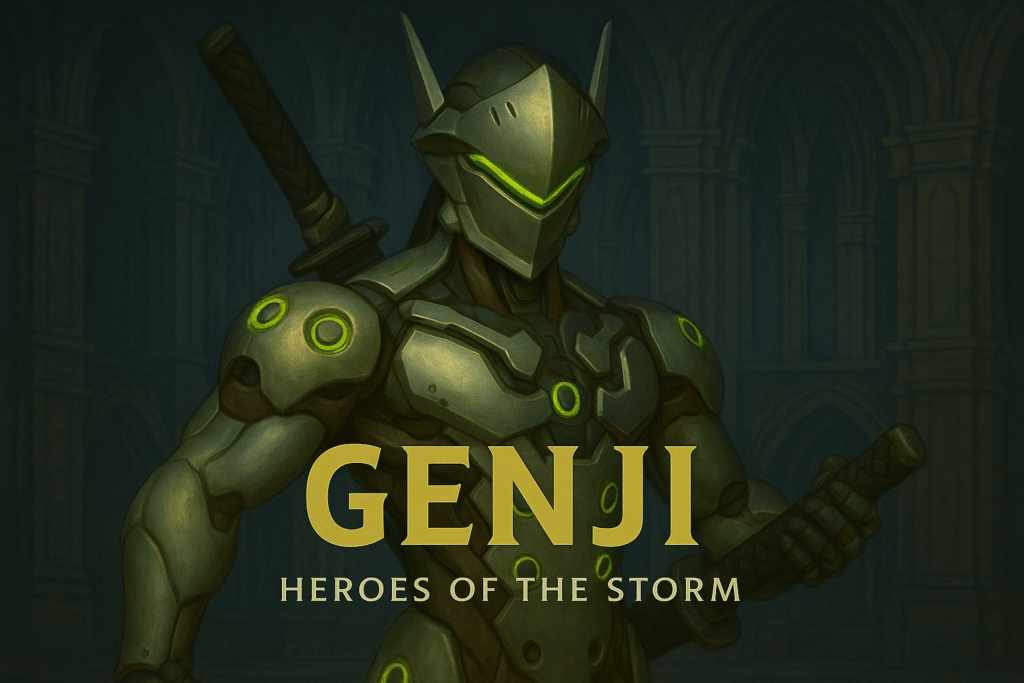
Hero Identity and Role Breakdown
Genji is at his best as a closer, not a volunteer. He pokes safely, scouts reactions, and waits for the exact moment a backliner, support, or low-health carry can no longer escape a clean dash sequence. When played well, he turns uncertainty into a kill faster than most assassins in the game.
What makes weak Genji games look so bad is that impatience is obvious. If you go first, Deflect nothing meaningful, or dash in where no reset exists, Genji becomes one of the easiest heroes in HOTS to punish. He is lethal, but only when the window is real.
Genji Abilities Explained
Cyber Agility (Trait - D) lets Genji jump over terrain and take angles most heroes cannot safely mirror. Shuriken (Q) is your poke, your setup, and your burst when all three stars land close. Deflect (W) is the timing tool that punishes enemy return damage when they answer your dive too predictably. Swift Strike (E) is your dash, finisher, and reset engine. Dragonblade (R1) gives you the explosive melee commit when a fight is ready to break. X-Strike (R2) gives safer burst and stalling value when you need damage without gifting your body first.
Shuriken keeps the pressure on, Swift Strike decides access and resets, and Deflect is the button that turns a reckless angle into a survivable one if you time it honestly.
How to Play Genji (Step-by-Step)
- Poke first so the enemy shows which buttons are truly reserved for you
- Keep Swift Strike for a kill, a reset, or a clean escape instead of spending it on first contact
- Use Deflect when the answer is already coming, not just because you are near someone
- Track which healer or carry no longer has the tool that normally makes them safe
- Go in when the fight is cracked, not when it is merely starting
How to Play Genji Effectively
Genji becomes much more reliable once you stop trying to be the opener. In lane and in skirmishes, the poke matters because it softens targets and baits defensive cooldowns that your real engage hates. If you are patient enough to let the fight reveal its cracks, the hero starts feeling brutally efficient.
In teamfights, Genji punishes broken structure. A carry without mobility, a support forced off-angle, or a backliner separated by one bad step can all become instant targets once your dash is honest. This wins fights by turning one sloppy second into a full reset chain faster than most teams can recover.
Around objectives, he likes the chaos that appears after the first commit rather than the first commit itself. Those fights produce the low-health bodies and fractured spacing Genji actually wants. If you still have cooldowns when that chaos starts, you can clean the whole thing up.
The beginner-friendly version is simple: poke first, keep track of the tools that can stop you, and do not Swift Strike unless a reset, a secure exit, or a very clear kill is already part of the plan.
In some games, Genji can feel like he is hovering around the fight without doing enough - that is normal. He starts taking over when one enemy finally drops into range and the whole reset sequence opens up cleanly.
Best Genji Builds (Level 1 to 20)
Swift as the Wind at level 1, Shuriken Mastery at level 4, Augmented Guard at level 7, X-Strike at level 10, Shingan at level 13, Final Cut at level 16, and Living Weapon at level 20.
Gameplay Focus - Shuriken Finisher
This is the steadier Genji build for ranked games where you want pressure before the all-in, not instead of it. It gives you better poke, cleaner burst when you shotgun Shuriken correctly, and a safer way to stay relevant until the reset finally opens.
What makes it strong in real matches is that it does not force you to pretend every fight is a Dragonblade montage. You chip from range, punish bad spacing with Shingan and Final Cut, then use X-Strike to finish or buy time while cooldowns shift. This wins fights by making the enemy backline feel uncomfortable long before you fully commit, then cashing out the first cracked target with very little warning.
In short, this build is best when you want Genji to pressure patiently, punish one exposed target hard, and still keep a safe heroic for volatile fights.
This build looks safer on paper, but it still falls apart if you refuse to play close enough for Shingan to matter or if you spend Swift Strike before the finish is actually there.
Alternative Genji Build (Level 1 to 20)
Agile Dismount at level 1, Strike At The Heart at level 4, Cyber Shield at level 7, Dragonblade at level 10, Flow Like Water at level 13, Final Cut at level 16, and The Dragon Becomes Me at level 20.
Gameplay Focus - Hard Commit Reset Genji
This is the greedier Genji route for games where your team can actually explode the first target and you trust yourself to recognize the real opening. Dragonblade gives the hero that fight-ending ceiling everyone fears, but it only feels amazing when the enemy has already spent the tools that would stop you.
That is what makes the alternative build more explosive but also more demanding. Agile Dismount and Flow Like Water help you keep tempo, Cyber Shield buys a little forgiveness when diving into return fire, and The Dragon Becomes Me turns one honest reset into a terrifying chase. In real fights, this build forces mistakes because the enemy backline knows one poor sidestep can become a full collapse instead of just more poke.
In short, this build is best when your draft can create clean follow-up, the enemy has answers you can track, and you want Genji at his most fight-defining instead of his most forgiving.
If the enemy can kite Blade forever or keep point-and-click lockdown untouched, this path loses value fast. When the window is real, though, it can decide the whole fight in seconds.
Common Player Mistake
Most Genji players fail here. They dash in because the angle looks flashy, not because the reset is actually there. In real matches, this is where Genji starts taking over: when key stuns or blinds are already gone and the target is truly isolated. If Uther stun missed or Brightwing Polymorph is down, that is often your real engage signal.
If you ever feel useless on Genji, it is usually because you are joining the fight before the enemy has actually given you a target worth spending your body on.
Genji is not the hero who starts the honest fight. He is the hero who punishes the broken one.
Real Match Situations
A support or carry drops low and retreats behind the frontline. That is where Genji becomes terrifying. He can still reach the target the rest of your team already forced out of position.
The enemy backline holds CC patiently. This is when discipline matters. Genji does not need to force the first entrance if the second one will be clean and lethal.
A teamfight turns chaotic after the first takedown. Chaos is Genji's home if your cooldowns are still intact. One reset can turn the mess into a full chase.
One Thing to Know
Genji rarely looks strongest at the start of the fight. He looks strongest the moment the fight stops being orderly.
What Changes Through the Match
Early game Genji is mostly about safe poke, camp pressure, and identifying which targets are realistically punishable. Mid game, his ability to finish picks starts swinging skirmishes more often. Late game, one clean reset or one honest Dragonblade window can wipe the whole fight because there is no time left for the enemy to regroup.
Advanced Tips
Do not spend Swift Strike to ask a question. That button should finish a target, secure a reset, or guarantee your escape route. If you use it just to see what happens, Genji stops feeling surgical and starts feeling coin-flippy.
Shotgun Shuriken before the dash whenever the angle is honest. A lot of Genji's real burst comes from landing all three stars at close range, not from the dash alone. When that poke lands first, the reset window opens much faster.
Deflect the answer, not the opening. Deflect gets much stronger when it catches the panic return damage after the enemy realizes you are actually committing. Used that way, it does more than save you. It punishes the instinctive response that was supposed to stop you.
Use your heroic to solve the actual fight. X-Strike is amazing when you need safe finish, stall, or delayed burst. Dragonblade is amazing when the enemy answers are already gone. The better read is not the flashier heroic. It is the one that fits the fight in front of you.
Limitations
Genji struggles into point-and-click lockdown, heavy blinds, and comps that never expose a target without keeping answers in reserve. He is amazing at exploiting chaos, but he does not want to create all of it alone.
FAQ
When should I pick Genji? Pick Genji when the enemy backline is punishable, when your team can help create low-health targets, or when mobility and clean finishing matter more than raw front-to-back damage.
Is Genji good in solo queue? Yes, if you are disciplined. He is strong in solo queue when you play for real punish windows and terrible when every dash is just a guess.
What should I focus on most in fights with Genji? Focus on the reset target and on the cooldowns that still deny it. Once both are clear, Genji's decision gets much easier.
What is the biggest mistake on Genji? The biggest Genji mistake is committing because the angle exists, not because the kill or the reset actually does.
What habit improves Genji the fastest? The fastest improvement is learning which enemy defensive tool must be gone before your dive is honest.
Related Guides
If you enjoy assassins that take over games in different ways, also check our Tracer guide, Greymane guide, and Li-Ming guide.
Final Thoughts
Genji becomes much more rewarding once you stop asking the hero to do everything at once and start leaning into what actually makes them special. If you master these fundamentals, Genji becomes one of the most impactful assassins in Heroes of the Storm.