Quick Answer
Hogger is a bruiser who creates chaos, controls chokes, and punishes clumped teams harder than almost any other offlaner. This guide covers the best Hogger build, practical gameplay tips, and real-match decisions that matter when you actually want to win with the hero.
If you want the best Hogger build in HOTS and a practical way to win with him, the key is understanding when his chaos is useful pressure and when it is just noise.
Hogger is strongest when the map gives him walls, narrow corridors, and fights that get messy. He is not a bruiser who wants neat, tidy trades. He wants movement, collisions, panic, and bad footing. When the enemy team has to fight in terrain they cannot comfortably navigate, Hogger starts to look absurd.
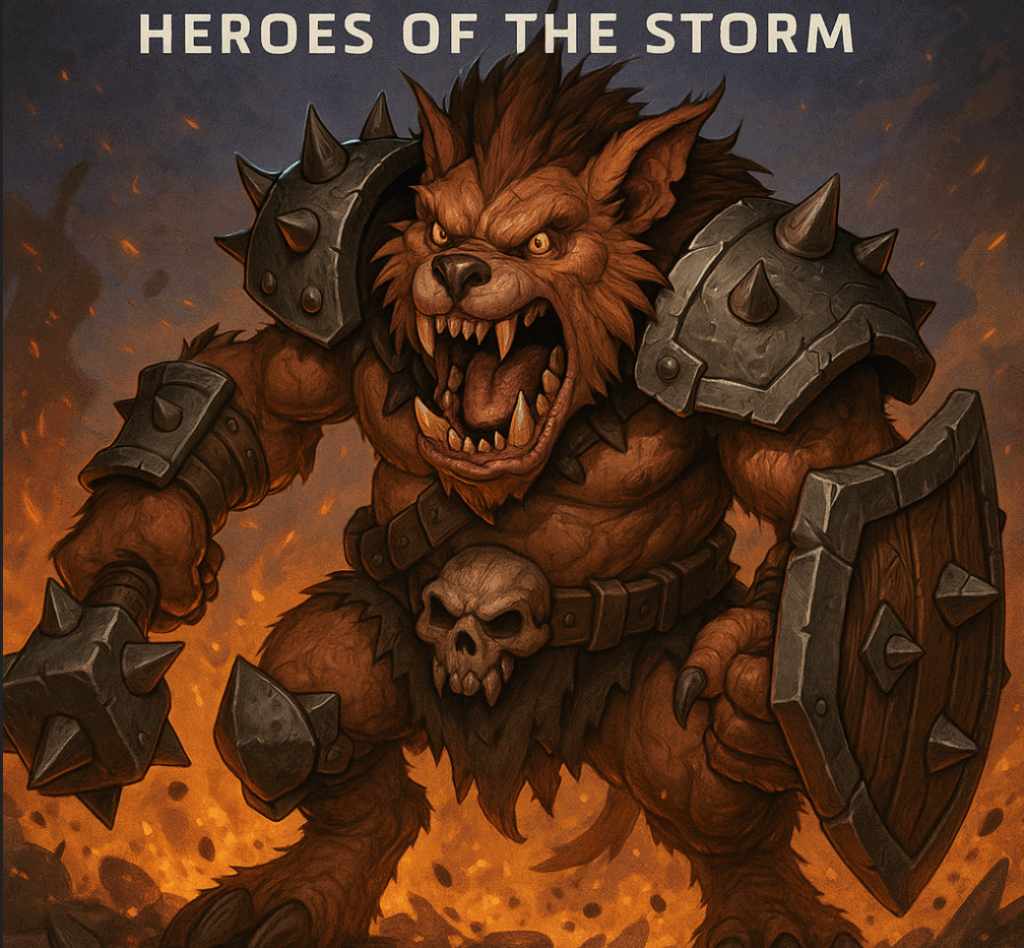
Hero Identity and Role Breakdown
Hogger is strongest when the map gives him walls, narrow corridors, and fights that get messy. He is not a bruiser who wants neat, tidy trades. He wants movement, collisions, panic, and bad footing. When the enemy team has to fight in terrain they cannot comfortably navigate, Hogger starts to look absurd.
That does not mean the hero is random. Good Hogger play is very deliberate. You are choosing where the fight becomes awkward, when to spin through the choke, and when to hold your space control tools for the enemy who thinks they can walk through first.
Hogger Abilities Explained
Trait – Rage (D) Accumulate rage while fighting, increasing attack speed. Dynamite (Q) Throw a stick of dynamite that explodes after a delay, dealing damage and stunning. Hogg Wild (W) Spin like a top, pushing enemies away and able to bounce off walls. Lurch For Prey (E) Leap to a targeted area, creating a shockwave upon impact. Shockwave (R1) Launch a series of dynamites that explode in chain reaction. Hoardapult (R2) Create an arena that damages enemies and knocks them back if they try to leave.
Hogger becomes much easier to understand once you stop treating his buttons like generic damage tools. Hogg Wild is movement and area control. Loot Hoard is terrain creation. His whole kit gets stronger when those two ideas are working together.
How to Play Hogger (Step-by-Step)
- Look for walls, corners, and choke points before the fight starts because that terrain decides how dangerous you are.
- Use Loot Hoard to create or improve an angle rather than throwing it out with no follow-up.
- Enter with purpose, then spin where the enemy has the least room to escape cleanly.
- Save enough control to punish the first enemy who tries to walk through your space.
- Back out before the chaos turns into feed and re-enter when your next angle is ready.
How to Play Hogger Effectively
Hogger wins fights when the enemy team has to move through spaces he already owns. That is where his damage, disruption, and pressure stack together and start forcing mistakes. If the enemy backline has to path through your loot hoard angle or your spin line, they stop playing the fight they wanted and start reacting to yours instead.
In lane, Hogger is less about clean textbook trading and more about turning terrain into leverage. He clears fast, threatens bursts of control, and makes many side-lane skirmishes feel unstable for the opponent. The real skill is deciding when to lean into that instability and when to keep things simple. Too many Hogger players create noise without value. The good ones create pressure that actually changes the map.
Teamfights are where the hero starts to feel brutal. One well-placed spin through a choke can win fights by itself because it chunks multiple heroes, blocks movement, and buys time for your team to collapse. This punishes mistakes hard, especially from players who step too close together or disrespect terrain. Mastering this mindset alone already makes you more impactful than most Hogger players.
The trap is using chaos as an excuse for sloppy play. The hero is wild, but the plan cannot be. You still need to know what angle you are taking, what cooldown you are waiting on, and which enemy you are trying to make uncomfortable first.
In some games, Hogger can feel random or awkward before terrain really matters - that's normal. He becomes terrifying once the map forces people through walls, corners, and chokes where his chaos stops being noise and starts becoming a plan.
Best Hogger Builds (Level 1 to 20)
This primary Hogger build is all about terrain abuse, choke control, and fight disruption that turns one bad step near a wall into a fight the enemy never stabilizes from.
Gameplay Focus - Choke Control and Fight Disruption
This is the build you want when objective fights happen in narrow spaces and your team benefits from Hogger turning those spaces into a disaster for the enemy. It is the most natural path when maps keep forcing both teams through corridors, shrines, or turn-in zones.
The build leans into what makes Hogger scary: repeated control over movement. You use terrain, loot hoard placement, and spin timing to deny comfortable paths while still dealing real damage. In actual matches, this feels less like brawling and more like running the enemy team through a grinder one bad step at a time.
This build gives Hogger real fight-winning presence because it turns map geometry into pressure. When the enemy team keeps contesting the same small space, your value climbs fast.
In short, this build is best when you want the cleanest version of Hogger in the kinds of fights the hero already prefers.
This build looks disgusting on paper, but it loses a lot of its magic on open ground where terrain stops helping you create the bad movement the hero feeds on.
Alternative Hogger Build (Level 1 to 20)
On The Prowl at level 1, Hogger's Joggers at level 4, Seeing Red at level 7, Shockwave at level 10, Pummel at level 13, Headbanger at level 16, No Control at level 20
Gameplay Focus - Sustain Pressure and Side-Lane Tempo
Take this route when you need Hogger to do more of the dirty work between major objectives. It is good in games where wave control, camp pressure, and repeatable skirmish value matter more than one giant choke fight.
This version makes Hogger better at keeping pressure alive between the obvious highlight moments. You still threaten nasty engages, but the real value comes from arriving to each fight with better lane state, more map pressure, and more room to choose your angle.
In practice, this build is strong when the enemy team is giving you time and space to make the whole map more annoying before the next objective ever starts.
In short, this build is best when the game asks Hogger to solve a slightly different problem than the default path.
Common Player Mistake
Most Hogger players fail here. They spin because they found a wall, not because the enemy path actually gets worse there. In real matches, this is where Hogger starts to take over: when the other team still has to cross the same choke and your angle is already set. If E.T.C. misses Slide or the enemy clumps near a wall after the engage fails, that is your real Hogg Wild window.
If you ever feel useless on Hogger, it's usually because the fight is happening in space you did not shape first.
Hogger only looks random from the outside. The hero becomes terrifying once your angles stop being accidental and start being chosen.
Real Match Situations
An objective spawns in a corridor-heavy area. This is where Hogger starts stealing games. You set up around the terrain early, threaten the spin line the enemy has to respect, and suddenly every step they take feels risky.
The enemy team groups too tightly behind their tank. Hogger loves this because one good angle can slam multiple heroes into the same bad space. That burst of disruption often creates the exact opening your backline needs to follow.
You are slightly behind but the map keeps forcing close fights. Hogger can still carry value here because terrain does not care who is ahead on the scoreboard. One smart setup around a wall can flip the fight back in your favor.
One Thing to Know
Hogger is not strongest when the fight looks messy. He is strongest when the mess is happening exactly where and when you wanted it to.
What Changes Through the Match
Early game Hogger is a strong lane and skirmish nuisance who can already punish bad pathing. Mid game is where his terrain control starts deciding objectives more often. Late game, one clean engage around a wall or one brutal spin line through a choke can instantly rewrite the fight because mistakes get punished so much harder.
Advanced Tips
Use Loot Hoard to improve a future angle, not just the current second. The best placements are the ones that make your next movement stronger and the enemy escape path worse. That is where the hero stops feeling random and starts feeling surgical.
Do not spin just because you found a wall. Hogg Wild is fight-changing when it forces people through bad movement or catches them where they cannot spread. If it only creates noise, you are spending your biggest pressure tool too cheaply.
Think in terms of enemy pathing, not your own combo. Hogger gets the most value when you ask where the enemy has to go next. That is how you turn terrain into a trap instead of just a damage source.
Leave before the fight throws you away for free. Hogger often gets one great entry and one greedy death. Knowing when your pressure window is over keeps the hero threatening all game instead of coin-flippy.
Limitations
Hogger loses value on open maps and in fights where terrain barely matters. He also suffers when the enemy team can poke him down before he sets up or when they have enough discipline to never give him the clumped movement he wants. If you misread the terrain or force bad entries, the hero can look a lot weaker than he really is.
FAQ
When should I pick Hogger? Pick Hogger when the battleground creates great terrain fights, when your team benefits from disruption, or when the enemy comp hates losing clean movement paths.
Is Hogger good in solo queue? Yes, especially when you play for repeatable value instead of highlight moments. The hero gets much stronger once you solve real map and fight problems instead of pressing buttons just to stay active.
When should I take Hoardapult over Shockwave? Take Hoardapult when terrain abuse and chaos are the best ways to break the enemy formation. Take Shockwave when you want a cleaner, more reliable initiation tool that is easier to convert in standard teamfights.
What is the biggest mistake on Hogger? The biggest mistake is assuming any chaotic engage is automatically good. Hogger only looks broken when the chaos is serving a real purpose.
What habit improves Hogger the fastest? Spend a second reading the wall and choke layout before each fight. That habit improves Hogger faster than trying to mechanically force better spins.
Related Guides
If you enjoy bruisers that take over games in different ways, also check our Leoric guide, Rexxar guide, and Xul guide.
Final Thoughts
Hogger is strongest when the game is asking exactly the kind of question this hero is built to answer. If you master these fundamentals, Hogger becomes one of the most useful bruisers in Heroes of the Storm.