Quick Answer
If you are looking for the best Malfurion build in HOTS and how to get more real value out of his roots and sustain, this guide breaks it down in a practical, real-match way. Malfurion is a control healer who wins through layered healing, repeated poke, and root pressure that slowly turns neutral fights into bad fights for the enemy.
This guide helps you stop playing him like a passive heal-over-time bot and start using his setup and pacing the way strong Malfurion players do.
He does not look explosive at first, but once the fight starts happening on his timing, the whole screen gets harder for the enemy to play in.
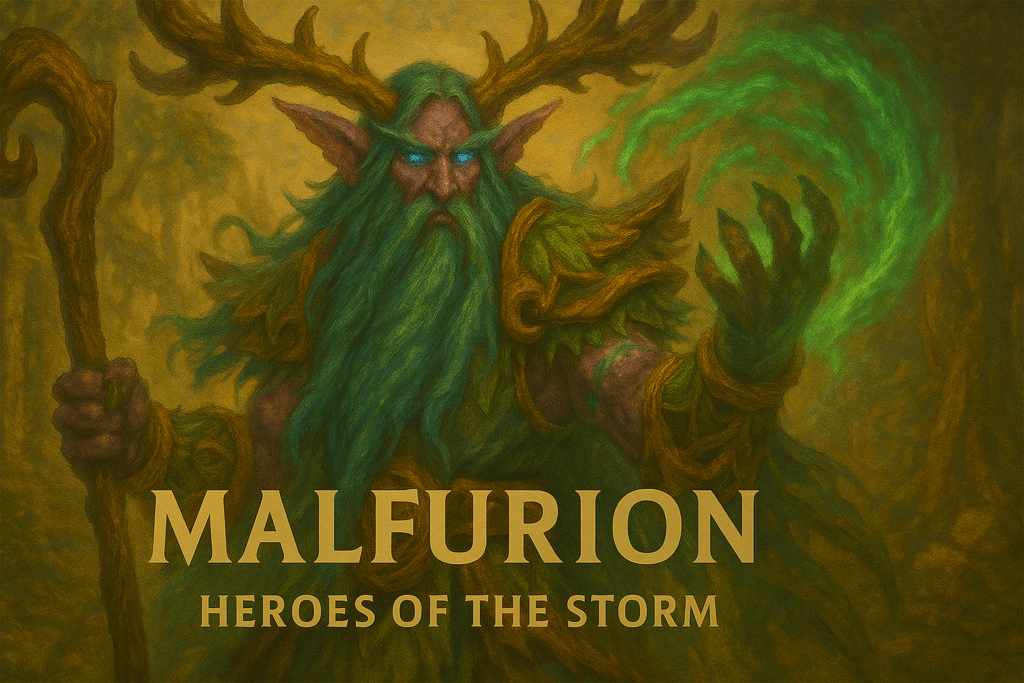
Hero Identity and Role Breakdown
Malfurion is one of the best examples of quiet control in Heroes of the Storm. Regrowth keeps value rolling before the real damage starts, Moonfire turns that healing into real throughput, and Entangling Roots makes impatient players pay for stepping too far into his space. He does not usually blow people up. He makes the fight feel slower, stickier, and more expensive for the enemy team.
That subtlety is exactly why weaker Malfurion games can feel flat. If your hots are on the wrong allies, if your root is used with no follow-up, or if you never manage mana and Moonfire spacing well, he can look like a healer who is doing a lot without changing much. Good Malfurion play feels very different. The enemy keeps losing small pieces of control until the fight is no longer comfortable.
Malfurion Abilities Explained
Innervate (Trait - D) Restore mana to target ally and grant them ability power. Regrowth (Q) Heal an ally instantly and provide healing over time. Moonfire (W) Damage and reveal enemies in target area, reducing armor. Entangling Roots (E) Skillshot root that immobilizes enemies after a delay. Tranquility (R1) Channel to provide massive area healing over time. Twilight Dream (R2) Area silence and damage centered on Malfurion.
Regrowth starts the value, Moonfire cashes it in, and Entangling Roots decides who is allowed to keep walking. Malfurion becomes threatening when those three parts are timed around the same fight window.
How to Play Malfurion (Step-by-Step)
- Use Regrowth proactively to maintain ally health before they take damage
- Look for Entangling Roots on overextended enemies once their movement becomes readable
- Use Innervate on mana-hungry allies like Jaina or Kael'thas when it actually extends lane pressure
- Use Moonfire to provide vision and poke enemies from safe distances
- Position for roots that can catch multiple grouped enemies when the choke narrows
How to Play Malfurion Effectively
Malfurion wins slow until suddenly he wins fast. The enemy usually notices too late which root or Moonfire cycle actually tipped the fight.
In lane and in the early map phase, The goal is to use Regrowth proactively to maintain ally health before they take damage. Land Entangling Roots on overextended enemies to secure early kills. Innervate mana-hungry allies like Jaina or Kael'thas for extended lane presence. The goal is to use Moonfire to provide vision and poke enemies from safe distances.
In teamfights, Position to land multi-person Entangling Roots on grouped enemies. The goal is to use Moonfire to reduce armor on priority targets before your team engages. Channel Tranquility from maximum range behind cover when possible. A lot of the value comes from saving Innervate for allies who are about to use their ultimate abilities.
Around objectives, Entangling Roots can interrupt enemy objective captures or channels. Tranquility allows your team to sustain through objective damage. The goal is to use Moonfire to provide vision around contested areas. Your sustained healing lets teams fight longer around objectives.
The beginner-friendly version is simple: keep Regrowth rolling on the heroes who are actually about to take damage, save root for readable movement, and do not burn Moonfire so carelessly that your mana evaporates for free.
In some games, Malfurion can feel like he is helping without really taking over - that is normal. He spikes when one rooted target or one sustained objective fight finally gives his layered healing and control enough time to matter.
Best Malfurion Builds (Level 1 to 20)
Deep Roots at level 1, Vengeful Roots at level 4, Cleanse at level 7, Twilight Dream at level 10, Nature's Cure at level 13, Ysera's Gift at level 16, Astral Communion at level 20
Gameplay Focus - Root Control Build
Crowd control mastery, pick potential, teamfight disruption
This build transforms Malfurion into a crowd control specialist who can single-handedly control teamfights through enhanced Entangling Roots and strategic positioning. Deep Roots significantly increases the duration of your root effect, turning a brief immobilization into a death sentence for caught enemies while providing your team ample time to follow up on picks. Vengeful Roots adds substantial damage and a slow effect to rooted enemies, making your crowd control not just disruptive but genuinely threatening to enemy health bars. Cleanse provides essential utility to counter enemy crowd control, allowing you to save allies from dangerous situations while maintaining your focus on offensive root plays. Twilight Dream becomes your primary teamfight tool, capable of silencing entire enemy teams and dealing massive damage when they group up, often forcing them to scatter or face devastating consequences. Nature's Cure upgrades your Regrowth with armor and spell armor, making your healing targets significantly more durable during the crucial moments after they receive healing. Ysera's Gift provides constant background healing that keeps your team topped off between engagements while also granting you significant self-sustain. Astral Communion at level 20 dramatically reduces your ability cooldowns, allowing you to root enemies more frequently and maintain constant healing pressure throughout extended fights.
Deep Roots extends crowd control duration for guaranteed follow-up potential. Vengeful Roots adds meaningful damage and slows to your crowd control. Cleanse provides defensive utility while maintaining your offensive focus. Twilight Dream punishes enemy grouping with massive area silence and damage. Nature's Cure makes your healing targets significantly more survivable. Ysera's Gift provides constant team sustain and personal survivability. Astral Communion enables rapid-fire crowd control and healing spam.
Lead your Entangling Roots predictions - enemies will try to dodge when they see the telegraph. Use Twilight Dream when enemies commit to fights and can't easily retreat. Vengeful Roots damage is significant - use it to finish off low-health enemies. Deep Roots duration allows for easy follow-up combos with allied crowd control.
In short, You're the master of battlefield control . Your roots dictate teamfight positioning while your silence can end fights before they truly begin.
This build looks extremely stable on paper, but it loses a lot of bite if your roots never threaten anything or if the enemy keeps resetting before your sustain advantage matters.
In real matches, this is the version that quietly suffocates teams that keep contesting the same space.
Alternative Malfurion Build (Level 1 to 20)
Shan'do's Clarity at level 1, Versatile at level 4, Enduring Growth at level 7, Tranquility at level 10, Tenacious Roots at level 13, Moonfire at level 16, Serenity at level 20
Gameplay Focus - Sustain Healing Build
Maximum healing output, team sustain, extended engagements
This build maximizes Malfurion's healing potential while maintaining meaningful utility, transforming him into a sustain powerhouse capable of keeping teams healthy through the longest engagements. Shan'do's Clarity provides the mana regeneration necessary to maintain constant healing throughout extended fights, ensuring you never run out of resources when your team needs healing most. Versatile significantly improves your Innervate utility by reducing its cooldown and enhancing its mana restoration, making you an invaluable resource for mana-hungry allies while also boosting their damage output. Enduring Growth dramatically extends the duration of your Regrowth healing over time effect, making each cast incredibly mana-efficient while providing long-lasting sustain that keeps allies healthy between fights. Tranquility becomes your signature ability, capable of healing your entire team from critical health to full when channeled safely, often turning lost teamfights into decisive victories. Tenacious Roots ensures your crowd control remains relevant by making rooted enemies take additional damage, creating meaningful follow-up opportunities even in a healing-focused build. Moonfire at level 16 upgrades your utility spell into a powerful healing amplifier that increases all healing done to affected targets, creating powerful synergies with your healing over time effects. Serenity at level 20 makes your Tranquility nearly unstoppable while adding movement capability, allowing you to provide game-changing healing even while under pressure.
Shan'do's Clarity provides unlimited mana for constant healing pressure. Versatile makes Innervate a powerful utility tool for mana-hungry allies. Enduring Growth dramatically increases healing efficiency through extended duration. Tranquility provides massive team healing that can single-handedly win fights. Tenacious Roots maintains crowd control relevance through damage amplification. Moonfire amplifies all healing done to affected targets for powerful synergies. Serenity makes your ultimate nearly unstoppable while adding mobility.
Use Regrowth proactively on allies who are about to take damage for maximum efficiency. Channel Tranquility behind walls or terrain whenever possible for safety. Innervate allies right before they use their ultimate abilities for maximum impact. Moonfire healing amplification stacks with all your healing over time effects.
In short, You're the eternal sustain provider . Your team can fight indefinitely because your healing over time effects and Tranquility make them nearly unkillable in extended engagements.
This gets much stronger once one long objective fight gives your sustain enough time to start feeling unfair.
If the enemy refuses to leave the objective, this version keeps tightening the fight until the root finally decides it.
If the root lands and Moonfire keeps ticking, this version forces the enemy to disengage early or lose the whole trade.
Common Player Mistake
Most Malfurion players fail here. They throw Entangling Roots where the enemy is instead of where the enemy has to go. In real matches, this is where Malfurion starts taking over: after spacing narrows and movement gets predictable. If Diablo already used Shadow Charge or the enemy backline is backing through a choke, that is your real root.
If you ever feel useless on Malfurion, it is usually because your healing is rolling on the wrong targets or your roots are arriving with no reason for anyone to stay in them.
Real Match Situations
A shrine or point fight slows down into repeated trading. That is where Malfurion gets paid. His healing pattern loves fights that last just long enough for repeated Moonfires to matter.
A diver is backing through a narrow lane after the first commit. Do not rush the root at first contact. Catching the retreat path is often the real punish.
Your tank starts a poke-heavy front-to-back fight. Keep regrowth spread before the hard damage starts, then Moonfire for value when multiple health bars actually need it.
One Thing to Know
Malfurion rarely looks flashy, but he is brutal when the fight lasts long enough for every small decision to matter.
What Changes Through the Match
Early game Malfurion is proving lane control, mana discipline, and whether his roots can actually threaten movement. Mid game, objective fights make his sustain pattern much more obvious. Late game, one silence heroic or one correct root path can decide the whole fight because no one has room left to shrug it off.
Advanced Tips
Lead your Entangling Roots predictions - enemies will try to dodge when they see the telegraph. That is how long fights quietly turn into wins.
Use Twilight Dream when enemies commit to fights and can't easily retreat. This is the part that makes the enemy feel like they can never quite finish the job.
Use Regrowth proactively on allies who are about to take damage for maximum efficiency. Used well, it forces the other team to keep trading on your rhythm instead of theirs.
Channel Tranquility behind walls or terrain whenever possible for safety. That extra patience is usually what makes the whole sustain pattern finally feel unfair.
Limitations
Malfurion can feel weak when your team keeps taking isolated burst fights before his healing engine is set up, when you draft him into relentless reset comps that never stay put, or when hard dive reaches him before he establishes space. He is powerful, but he wants readable fights.
FAQ
When should I pick Malfurion? Pick Malfurion when your team values sustained healing, setup roots, and objective fights that are likely to stay live for a while.
Is Malfurion good in solo queue? Yes, especially if you are comfortable playing for repeatable value instead of dramatic saves. He rewards calm timing more than panic reactions.
What should I focus on most in fights with Malfurion? Focus on keeping the right hots active before damage arrives and on using roots where movement will become forced.
What is the biggest mistake on Malfurion? The biggest Malfurion mistake is treating Entangling Roots like a random opener instead of a trap for predictable pathing.
What habit improves Malfurion the fastest? The fastest improvement is learning to think one step ahead with Regrowth spread and root placement.
Related Guides
If you enjoy support heroes that solve fights in different ways, also check our Tyrande guide, Brightwing guide, and Anduin guide.
Final Thoughts
Malfurion becomes much more rewarding once you stop asking the hero to do everything at once and start leaning into what actually makes them special. If you master these fundamentals, Malfurion becomes one of the most impactful support picks in Heroes of the Storm.