Quick Answer
If you are looking for the best Muradin build in HOTS and how to actually become a reliable frontline on him, this guide breaks it down in a practical, real-match way. Muradin is a classic tank with strong engage, sturdy sustain, and enough peel and disruption to fit into almost any draft.
This guide covers the best Muradin build, gameplay tips, and real-match decision making to help you win more games.
Muradin is one of the safest tanks to trust in Heroes of the Storm because his kit always gives you something useful to do. He can engage, peel, interrupt, survive burst, and still threaten backliners if they get sloppy. This guide helps you turn that flexibility into cleaner, more consistent value.
Hero Identity and Role Breakdown
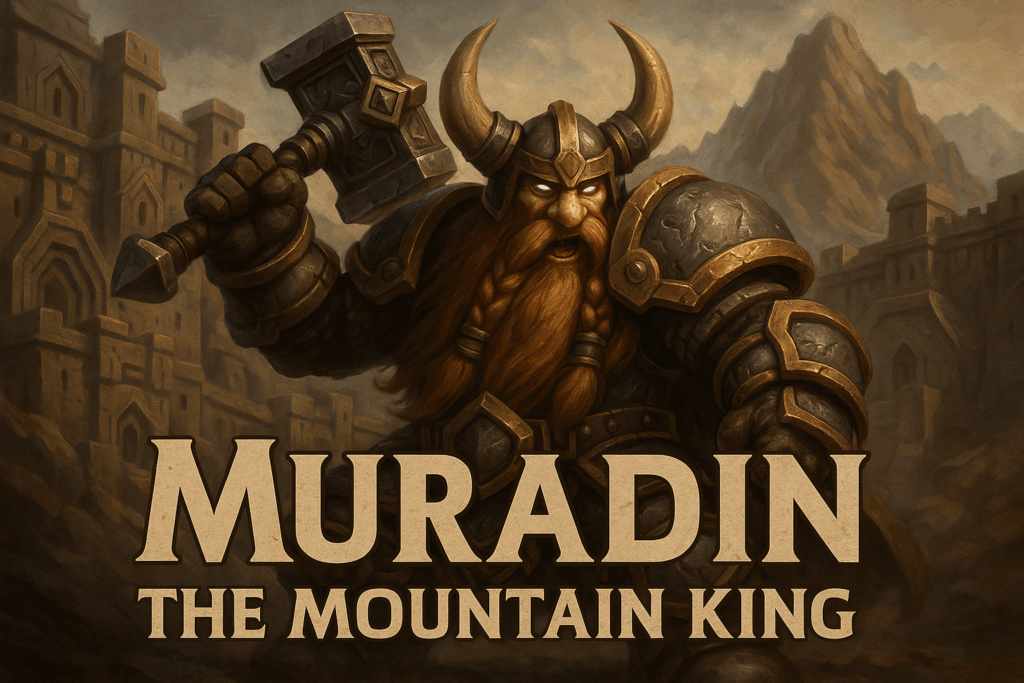
Muradin is the dependable dwarf tank for players who want a little bit of everything. He has point control, a targeted jump, strong peel, and a trait that rewards patience between trades. He is not as specialized as some tanks, but that versatility is exactly why he stays useful in so many drafts.
What makes him strong is how rarely he feels truly bad. Even if the draft is awkward, Storm Bolt still interrupts, Dwarf Toss still creates angles, and Second Wind still gives you resets many tanks do not get. The catch is that flexible heroes often tempt players into sloppy choices. Muradin looks best when you know whether the next fight needs an engage, a peel, or a disruption tool.
Muradin Abilities Explained
Second Wind (Trait) gives you massive sustain when you leave combat, which makes short resets much more valuable. Storm Bolt (Q) is your reliable stun and setup tool. Thunder Clap (W) gives area slow and front-to-back control. Dwarf Toss (E) is your engage, escape, and angle fixer. Avatar makes you a much sturdier frontliner with extra crowd control, while Haymaker turns Muradin into a displacement playmaker that can completely ruin enemy positioning.
How to Play Muradin (Step-by-Step)
- Figure out whether the next fight needs your jump as engage or your stun as peel.
- Use Storm Bolt with intent instead of throwing it at the first target in range.
- Dwarf Toss only when you know what happens after you land.
- Use short disengages to let Second Wind do real work.
- Save heroic value for moments your team can actually convert.
How to Play Muradin Effectively
Muradin is at his best when he feels calm. A lot of weaker Muradin games come from jumping too early, stunning the wrong target, or acting like being tanky means you must constantly be in danger. The hero actually rewards measured aggression. Go in when the timing is real, leave when your trait can buy you another round, and do not spend your most important cooldowns before the fight becomes meaningful. When Muradin is played well, he feels impossible to pin down. He starts the fight, vanishes from the enemy's clean kill window, then crashes back in right when they thought they had room to breathe.
In teamfights, Storm Bolt is often the spell that defines your value. If it hits the enemy dive hero at the right time, you peel perfectly. If it catches a mage stepping too far forward, it starts the whole fight. If it interrupts a key channel, you save the entire engage. Muradin becomes much easier once you stop seeing Q as generic damage and start treating it like the button that decides what kind of fight you are having. That one habit alone wins more fights than most flashy dwarf tosses ever will.
Avatar makes you simple and reliable. Haymaker makes you tricky and explosive. Both are good, but they reward different instincts. If you are newer to Muradin, keep the rule simple: Avatar wins by giving you more chances to keep fighting correctly, while Haymaker wins by turning one positional mistake into a disaster. Mastering this mindset alone will already make you more impactful than most Muradin players.
Best Muradin Builds (Level 1 to 20)
Perfect Storm at level 1, Reverberation at level 4, Iron-forged Momentum at level 7, Avatar at level 10, Heavy Impact at level 13, Imposing Presence at level 16, and Unstoppable Force at level 20.
Gameplay Focus - Reliable Main Tank
This is the steady Muradin build for players who want consistency. Avatar turns you into a trustworthy frontline, the surrounding talents improve your tanking rhythm, and the whole path rewards sticking around long enough to disrupt multiple times in one fight. This is the version of Muradin that makes enemy divers feel like every commit is a gamble, because your control keeps coming back around.
What makes this build so strong in real matches is that it gives Muradin more chances to be correct. Perfect Storm keeps your threat relevant, Reverberation and Imposing Presence make life miserable for attack-based heroes, and Avatar gives you the extra life bar that lets you stay in the exact brawl where other tanks would already be backing off. Once Heavy Impact and Unstoppable Force come online, your re-engage becomes much scarier and much harder to interrupt.
This is the build that wins fights by surviving the first contact and then owning the second one. The enemy team spends resources trying to force you out, you absorb it, and then Muradin comes back into the same fight with another stun, another body block, and another chance to break their rhythm. On long objective fights, that reliability feels brutal.
In short, this build is best when your team needs a stable tank who can engage, peel, and stay relevant across long objective fights.
Alternative Muradin Build (Level 1 to 20)
Block at level 1, Crowd Control at level 4, Sledgehammer at level 7, Haymaker at level 10, Bronzebeard Rage at level 13, Stoneform at level 16, and Grand Slam at level 20.
Gameplay Focus - Displacement Playmaker
This build is for players who want Muradin to create chaos. Haymaker lets you remove a target from the fight, punt someone into your team, or simply break an enemy frontline apart at the perfect moment. It is the version of Muradin that turns one weird angle into a full teamfight swing.
In real matches, this build shines when the enemy composition depends on formation. Haymaker punishes oversteps hard, Sledgehammer gives you better structure and merc pressure when needed, and Stoneform keeps the dwarf alive long enough to attempt high-value disruption without instantly exploding. Once Grand Slam is online, the angle game becomes much nastier because you can threaten displacement from places the enemy thought were safe.
This is the build that wins fights by forcing mistakes and then making those mistakes impossible to recover from. A healer shoved out of position, a frontliner knocked away from their backline, or a carry bounced into your team can decide the whole exchange in one moment. When it lands cleanly, it feels unfair in the best way.
In short, this build is best when fights are decided by one big positional mistake and your team knows how to punish knockback value.
Real Match Situations
The enemy Genji keeps hovering around your backline instead of fully committing. Holding Storm Bolt for his real entry is often better than throwing it early and hoping.
You jump in, but the enemy healer is just outside range. This is where many Muradin players overchase. Sometimes the right play is to slow the frontline, back off, and use Second Wind instead of forcing the impossible kill.
The objective fight gets scrappy and no one is dying quickly. Muradin loves these fights because his repeat disruption and reset sustain usually age better than the enemy's burst.
One Thing to Know
Muradin is strongest when he fights in rounds, not when he pretends he only gets one life.
What Changes Through the Match
Early game Muradin is about clean stuns and threatening jumps. Mid game is where heroic choice really starts changing how you approach fights. Late game, every cooldown matters more because one stun can decide the carry duel and one bad jump can still lose the whole fight. He scales well when your decision making stays disciplined.
Advanced Tips
Storm Bolt first if the target still has mobility. Make them react before you jump. If you toss out Dwarf Toss before forcing that first movement tool, you often spend your best gap closer just to watch the target escape anyway. High-value Muradin play is often about making the enemy answer your stun and then punishing whatever direction they chose.
Second Wind is part of your fight plan. Small resets are real value, not cowardice. The best Muradins understand that backing out for a few seconds can be the setup for the next winning re-entry, especially in objective fights where staying alive matters more than pretending you are immortal.
Haymaker is often best used on the hero your team least wants in the current fight. That is not always the squishy. Sometimes the right punch is the bruiser blocking your carry, the tank protecting a choke, or the diver who finally committed too far. Think about which enemy body is creating the most immediate problem, then remove it.
Dwarf Toss does not need to start every engage. Sometimes it wins more as a follow-up or escape. If the enemy has already committed to a bad spot, walking in and saving Toss for the second layer of the fight often gives Muradin much more control than diving first and hoping the rest sorts itself out.
Limitations
Muradin is flexible, but he is not magic. He can struggle into sustained percent damage, very heavy blinds, or games where his team never follows the windows he creates. He also loses a lot of value if he becomes predictable with his jump timing. The hero is forgiving, but not so forgiving that autopilot works forever.
FAQ
Is Muradin good in solo queue? Yes. He is one of the safest solo queue tanks because his kit is always useful even with imperfect coordination.
When should I take Avatar over Haymaker? Take Avatar when you need reliability and longer frontline uptime. Take Haymaker when displacement is the bigger win condition.
Why do I die after jumping in? Usually because the jump happened before your team or your target priority was wrong.
Should I use Storm Bolt on tanks? Sometimes, but not by default. The best target is the one whose timing matters most right now.
What improves Muradin the fastest? Learning when to disengage and let Second Wind reset you.
Related Guides
If you enjoy reliable tanks with strong disruption, also check our E.T.C. guide, Johanna guide, and Diablo guide.
Final Thoughts
Muradin stays relevant because he always gives good players room to make good decisions. If you master these fundamentals, Muradin becomes one of the most dependable and impactful tanks in HOTS.