Quick Answer
If you are looking for the best Probius build in HOTS and how to make him feel oppressive instead of fragile, this guide breaks it down in a practical, real-match way. Probius is a control assassin who wins by preparing space, forcing enemies through bad routes, and making objective areas feel almost impossible to enter cleanly.
This guide helps you stop improvising every fight on Probius and start building the battlefield before the enemy gets there.
He feels strongest when the enemy tries to take a normal objective fight and realizes the ground was already lost ten seconds ago.
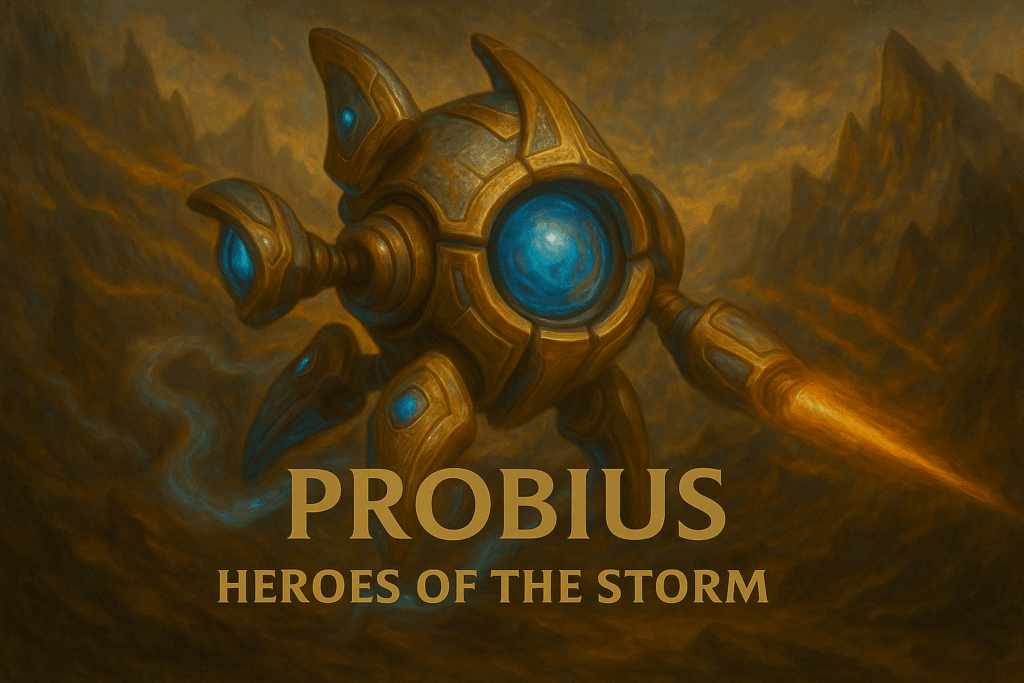
Hero Identity and Role Breakdown
Probius is not a reactive hero. He is at his best when pylons, rifts, and zone pressure are already in place before the fight begins. When that setup is respected too late, the enemy either walks through damage they hate or gives up the area entirely. Very few assassins can make objective space feel this awkward.
That is also why weak Probius games feel terrible. If you arrive late, if your pylons are exposed, or if you keep taking fights on empty ground with no structure behind you, the hero can feel brittle and underpowered. Probius is not weak so much as brutally dependent on preparation.
Probius Abilities Explained
Gather Minerals (Trait - D) Basic attacks reduce ability cooldowns and grant minerals for Pylon construction. Disruption Pulse (Q) Fire an energy blast that explodes when hitting Warp Rifts. Warp Rift (W) Create a rift that slows enemies and detonates with other abilities. Worker Rush (E) Dash forward, passing through units and reducing next ability cooldown. Pylon Overcharge (R1) Overcharge a Pylon to create a massive damage area. Null Gate (R2) Create a barrier that silences and slows enemies passing through.
Pylons and Warp Rifts are the real heart of the kit. Probius becomes threatening once the enemy has to fight in space that already belongs to your setup.
How to Play Probius (Step-by-Step)
- Reach the objective early enough that the first pylon is already working before anyone contests
- Build rifts on the path the enemy is most likely to insist on using
- Use Worker Rush to keep your setup alive and your body out of bad trades
- Fight inside your own infrastructure whenever you can instead of improvising on empty ground
- If the map gives you ten seconds, spend them preparing the battlefield, not fishing for poke
How to Play Probius Effectively
Probius stops feeling fragile once you stop asking him to play fair, late, reactive fights. In lane and on rotation, every second of prep is value because it turns future space into your space. If pylons and rifts are already there when the enemy arrives, the whole match starts looking very different.
In fights, Probius is terrifying when the enemy has to choose between walking through damage or giving up ground. That is why he feels so much weaker in random skirmishes with no setup: the hero is not broken, the battlefield is unfinished. Once the fight happens where you planned it to happen, he can absolutely win it by himself.
Around objectives, this is one of the biggest arrive-first heroes in HOTS. A properly staged shrine, turn-in, or control point becomes homework the enemy never wanted. If they still walk through it, the punish is real. If they hesitate, you already won the space.
The beginner-friendly version is simple: place pylons before contact, build rifts where the enemy is likely to step next, and resist the urge to improvise every fight from scratch.
In some games, Probius can feel useless when fights happen too fast - that is normal. He takes over the moment the battleground gives him even a few seconds to prepare the area properly.
Best Probius Builds (Level 1 to 20)
Warp Resonance at level 1, Turbo Charged at level 4, Tower Defense at level 7, Pylon Overcharge at level 10, Aggressive Matrix at level 13, Gravity Well at level 16, Construct Additional Pylons at level 20
Gameplay Focus - Rift Master
Burst Damage, Zone Control, Combo Potential
The Rift Master build maximizes Probius's explosive potential by focusing entirely on Warp Rift synergies and combo damage. Warp Resonance allows you to maintain multiple rifts simultaneously, creating complex geometric patterns that enemies must navigate while avoiding your pulse shots. Turbo Charged provides the mana sustain needed for constant ability usage, while Tower Defense gives your pylons actual teeth in combat. Pylon Overcharge becomes your primary teamfight tool, creating massive no-go zones that force enemies into your pre-placed rift fields. This build excels in coordinated team environments where you can set up elaborate traps and combos. The late-game power spike with Gravity Well and Construct Additional Pylons transforms you into a map-controlling monster who can simultaneously threaten multiple lanes and objectives.
Warp Resonance lets you maintain 2 Warp Rifts, doubling your combo potential. Turbo Charged provides mana return when rifts detonate, enabling constant casting. Tower Defense makes pylons shoot at enemies, adding passive damage and threat. Pylon Overcharge creates massive AoE damage zones for teamfight control. Aggressive Matrix increases rift damage and explosion radius significantly. Gravity Well adds a powerful slow to rift explosions for better follow-up. Construct Additional Pylons allows 3 total pylons with global placement.
Always maintain maximum rifts and place them in geometric patterns. Use Worker Rush to quickly reposition between rift placements. Pre-place Pylon Overcharge areas where enemies will be forced to fight. Basic attack between spells to keep cooldowns low and mana high.
In short, You're the Geometry Professor . Turn the battlefield into a deadly math problem where wrong positioning equals death.
This build looks disgusting on paper, but it loses a lot of power if the fight never happens near your established pylons and rifts.
This wins fights by making the enemy's best path the same path you already trapped for them.
Alternative Probius Build (Level 1 to 20)
Echo Pulse at level 1, Particle Accelerator at level 4, Rift Shock at level 7, Null Gate at level 10, Shoot 'em Up at level 13, Quantum Entanglement at level 16, Gate Keeper at level 20
Gameplay Focus - Cannon Battery
Sustained Damage, Utility, Team Support
The Cannon Battery build transforms Probius from a burst mage into a sustained damage dealer with powerful utility options. Echo Pulse allows your Disruption Pulse to bounce between enemies, creating consistent damage output that doesn't rely solely on rift combos. Particle Accelerator significantly increases your pulse range and damage, making you more effective at poking and harassing from safe distances. Rift Shock adds a crucial slow to your basic damage ability, improving your kiting potential and setup opportunities. Null Gate provides incredible team utility by creating barriers that silence enemies and control their movement. This build shines in extended fights and objective-based scenarios where sustained pressure and utility matter more than burst potential. The combination of increased range, bouncing projectiles, and movement control makes you a constant threat that's difficult to pin down.
Echo Pulse makes Disruption Pulse bounce between enemies for sustained damage. Particle Accelerator dramatically increases pulse range and damage output. Rift Shock adds slowing effect to Disruption Pulse for better control. Null Gate provides team utility with silencing barriers and movement control. Shoot 'em Up increases pulse damage and reduces cooldown significantly. Quantum Entanglement makes rifts teleport you when detonated for mobility. Gate Keeper enhances Null Gate with damage and longer duration.
Focus on consistent pulse shots rather than complex rift combos. Use Null Gate to split enemy teams and control chokepoints. Position to maximize Echo Pulse bounces between multiple enemies. Quantum Entanglement rifts become emergency escape tools.
In short, You're the Persistent Engineer . Wear down enemies with constant pressure while controlling the battlefield's flow.
On maps with long setups and repeated sieges, this path makes Probius feel less like a trap hero and more like a full-time zone-control nightmare.
Common Player Mistake
Most Probius players fail here. They walk into the objective with no pylon network and expect the hero to perform like a normal mage. In real matches, this is where Probius starts taking over: when the first enemy step into the zone is already a mistake. If the shrine is about to activate or the turn-in is about to matter, that is your real setup timer.
If you ever feel useless on Probius, it is usually because you are asking last-second spells to solve a setup problem you never handled earlier.
Probius is not a weak mage. He is a prepared battlefield pretending to be a hero.
Real Match Situations
An objective is about to spawn and both teams are rotating in. This is the dream. Probius gets paid when he arrives first and turns the entrance into homework for the enemy.
The enemy has to walk through one obvious corridor. That path is rarely safe against a prepared Probius. Rift value jumps the second movement becomes predictable.
A teamfight starts away from your pylons. That is your warning sign. Probius can still help, but he is far more dangerous when the fight happens where you planned it to happen.
One Thing to Know
Probius usually looks weak only in the fights he was forced to start late.
What Changes Through the Match
Early game Probius is proving whether he can own space before opponents reach it. Mid game objectives make that strength much more visible because teams are forced into repeated contest zones. Late game, one properly prepared area can decide the whole fight by itself because the enemy cannot afford to walk through the wrong trap line twice.
Advanced Tips
Always maintain maximum rifts and place them in geometric patterns. That is where the hero's space control stops looking annoying and starts feeling impossible to walk through.
Use Worker Rush to quickly reposition between rift placements. Used on the real route, it forces the enemy into the exact mistake you wanted.
Focus on consistent pulse shots rather than complex rift combos. That one disciplined placement is usually what makes the whole setup feel unfair.
Use Null Gate to split enemy teams and control chokepoints. This is the point where the other team stops choosing freely and starts reacting to your ground.
Limitations
Probius struggles in chaotic skirmishes with no setup time, into dive that kills pylons or body first, and in games where his team never plays around the space he creates. He is amazing with preparation and underwhelming without it.
FAQ
When should I pick Probius? Pick Probius when the map has strong objective staging, when your team can defend your setup, or when the enemy must move through narrow and predictable space.
Is Probius good in solo queue? He can work in solo queue, but only if you are comfortable playing proactively and not expecting random teammates to automatically understand your zones.
What should I focus on most in fights with Probius? Focus on owning the ground before damage starts. Probius becomes scary once the battlefield is doing part of the work for you.
What is the biggest mistake on Probius? The biggest Probius mistake is fighting on empty ground and then blaming the hero for not behaving like a generic mage.
What habit improves Probius the fastest? The fastest improvement is learning to think one objective phase ahead with pylon and rift placement.
Related Guides
If you enjoy assassins that take over games in different ways, also check our Azmodan guide, Junkrat guide, and Chromie guide.
Final Thoughts
Probius becomes much more rewarding once you stop asking the hero to do everything at once and start leaning into what actually makes them special. If you master these fundamentals, Probius becomes one of the most impactful assassins in Heroes of the Storm.