Quick Answer
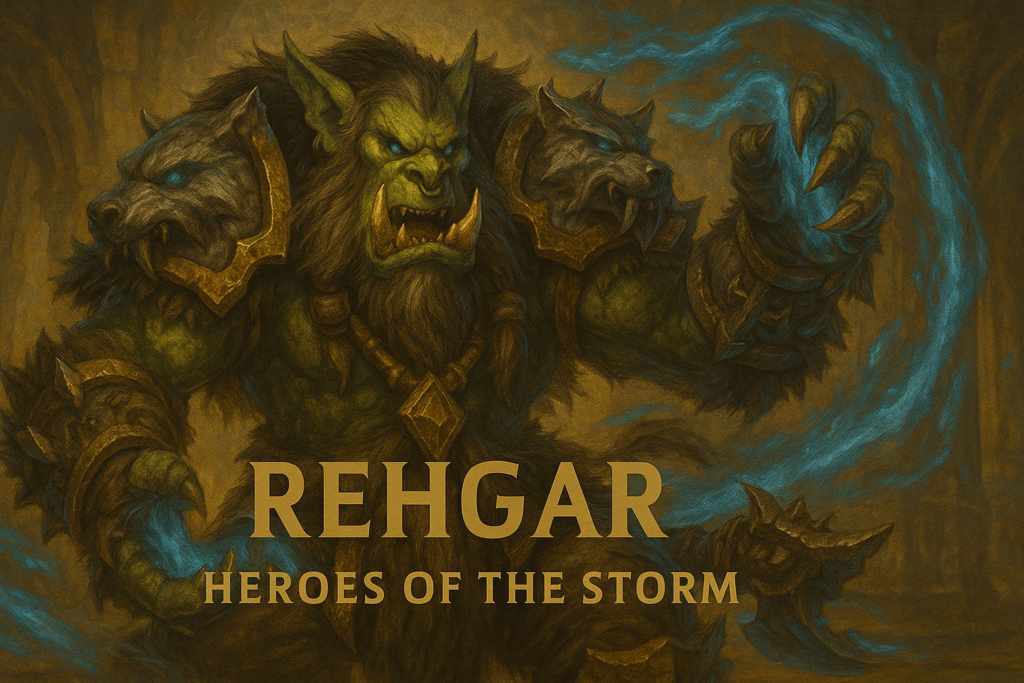
If you are looking for the best Rehgar build in HOTS and how to get real value out of his aggressive support style, this guide breaks it down in a practical, real-match way. Rehgar is a melee healer who wins through fast rotations, clutch burst healing, and the kind of frontline support that lets allies go much harder than they should.
This guide helps you stop floating around passively on Rehgar and start using his tempo, totem control, and burst saves the way strong Rehgar players do.
He is one of the few healers who can show up early, start the fight with you, and still be the one who saves the target everyone thought was dead.
Hero Identity and Role Breakdown
Rehgar sits in a very useful space between healer, brawler, and tempo support. Ghost Wolf lets him get to the next play early, Lightning Shield turns allies into moving zones of damage, and Chain Heal gives him the kind of burst recovery that matters when the fight finally spikes. He is not there to stand twenty miles away and react. He is there to arrive first and keep momentum on your side.
That is exactly why bad Rehgar games feel so awkward. If you are late to the rotation, if your totem lands too late, or if Chain Heal only ever bounces once, the hero suddenly feels much less special. Rehgar is strongest when he is shaping the timing of the fight rather than merely surviving it.
Rehgar Abilities Explained
Ghost Wolf (Trait - D) Transform into a wolf form for 40% movement speed and pass through units. Chain Heal (Q) Heal an ally and bounce to 2 nearby allies with reduced effectiveness. Lightning Shield (W) Shield an ally that deals damage to nearby enemies when they take damage. Earthbind Totem (E) Place a totem that slows enemies in a large area. Ancestral Healing (R1) Massive single-target heal with cast time. Bloodlust (R2) Team-wide attack speed and movement speed buff.
Chain Heal saves the health bars, but Rehgar becomes powerful when Ghost Wolf speed, Lightning Shield tempo, and Earthbind Totem all point at the same moment in the fight.
How to Play Rehgar (Step-by-Step)
- Use Ghost Wolf to rotate quickly between lanes and provide timely heals
- Place Lightning Shield on minions or allies engaging enemies for extra damage
- Hold Earthbind Totem for escapes or setting up ganks with your team
- Focus on maintaining mana efficiency with well-positioned Chain Heals
- Enter fights in Ghost Wolf form to position for maximum Chain Heal bounces
How to Play Rehgar Effectively
Rehgar is not passive safety. He is a healer who gets paid for being early to the part of the map where the fight is about to happen.
In lane and in the early map phase, The goal is to use Ghost Wolf to rotate quickly between lanes and provide timely heals. You usually want to place Lightning Shield on minions or allies engaging enemies for extra damage. A lot of the value comes from saving Earthbind Totem for escapes or setting up ganks with your team. A lot of the value comes from maintaining mana efficiency with well-positioned Chain Heals.
In teamfights, The fight usually looks best when you enter in Ghost Wolf form to position for maximum Chain Heal bounces. The goal is to use Lightning Shield on your frontline before they engage. A lot of the value comes from saving Ancestral Healing for critical moments when allies drop below 30% health. The goal is to use Earthbind Totem to control enemy positioning and create escape routes.
Around objectives, Ghost Wolf provides excellent rotation speed for map objectives. The goal is to use Lightning Shield on objective-focused allies (like those channeling). Earthbind Totem can zone enemies away from contested areas. Your mobility allows you to contest objectives other supports cannot.
The beginner-friendly version is simple: rotate early, place totem before the enemy is comfortable, and start Ancestral a little earlier than your nerves want to.
In some games, Rehgar can feel like he is doing too many jobs at once - that is normal. He starts taking over when the first important rotation or the first clutch Ancestral makes the whole map feel faster for your team and slower for the enemy.
Best Rehgar Builds (Level 1 to 20)
Colossal Totem at level 1, Stormcaller at level 4, Cleanse at level 7, Ancestral Healing at level 10, Earth Shield at level 13, Earthgrasp Totem at level 16, Storm Shield at level 20
Gameplay Focus - Chain Heal Sustain Build
Sustained healing, team protection, utility
This build transforms Rehgar into a healing powerhouse focused on keeping his team alive through extended engagements. The foundation lies in maximizing Chain Heal's effectiveness while providing crucial utility through enhanced totems and protective abilities. Colossal Totem at level 1 provides a massive slow zone that can control entire teamfights, while Stormcaller ensures you have the mana to keep healing throughout prolonged battles. Cleanse at level 7 is essential for saving allies from deadly crowd control effects, and Ancestral Healing provides the burst healing needed to save critically wounded teammates. Earth Shield adds a powerful shield component to your healing rotation, while Earthgrasp Totem upgrades your basic totem into a root effect that can lock down enemies. Storm Shield at 20 provides team-wide protection that can turn the tide of late-game teamfights. This build excels in compositions that favor sustained combat over quick burst exchanges.
Colossal Totem creates massive zone control that forces enemies to reposition or fight at a disadvantage. Stormcaller provides the mana sustain needed to chain heal consistently throughout long fights. Cleanse removes debuffs and crowd control, keeping your team mobile and effective. Ancestral Healing delivers game-changing burst healing when timed correctly. Earth Shield adds significant effective health to your healing targets through shields. Earthgrasp Totem upgrades your utility from slow to hard crowd control. Storm Shield provides team-wide mitigation that stacks with your healing.
Always position to hit 3 targets with Chain Heal - the mana efficiency is crucial. Use Colossal Totem proactively to control teamfight positioning, not reactively. Save Cleanse for high-impact crowd control effects like roots, stuns, or silences. Ancestral Healing has a cast time - start it early when you predict incoming burst damage.
In short, You're the sustained healing backbone . Your team can fight longer and more aggressively because you provide consistent healing and utility throughout extended engagements.
This build is extremely reliable, but it loses a lot of bite if your Chain Heal never gets good bounce value or if your team is too scattered for your utility to stack cleanly.
In real fights, this wins when one early Ancestral or one huge Chain Heal bounce keeps the fight alive just long enough to flip it.
Alternative Rehgar Build (Level 1 to 20)
Wolf Run at level 1, Stormcaller at level 4, Blood and Thunder at level 7, Bloodlust at level 10, Tidal Waves at level 13, Hunger of the Wolf at level 16, Gladiator's War Shout at level 20
Gameplay Focus - Bloodlust Aggression Build
Team empowerment, aggressive positioning, burst windows
The Bloodlust build transforms Rehgar from a defensive healer into an aggressive team enabler who creates powerful offensive windows. This build revolves around using Bloodlust to amplify your team's damage output during critical moments while maintaining strong healing through enhanced Chain Heal mechanics. Wolf Run provides permanent movement speed that allows you to position aggressively and escape danger, while Stormcaller ensures you have the mana to support extended aggressive plays. Blood and Thunder adds significant damage to your Lightning Shield, making it a threatening offensive tool rather than just a defensive shield. Bloodlust becomes your primary game-changing ability, turning your entire team into a hyper-aggressive force that can melt enemies during its duration. Tidal Waves makes your Chain Heal bounce more effectively, ensuring you can keep your buffed team healthy during their aggressive pushes. Hunger of the Wolf provides significant self-sustain and damage, allowing you to contribute meaningfully to fights beyond just healing. The level 20 upgrade extends Bloodlust's duration and adds spell power, making it even more devastating in late-game teamfights.
Wolf Run provides permanent mobility for aggressive positioning and quick rotations. Stormcaller enables sustained aggressive play through superior mana management. Blood and Thunder turns Lightning Shield into a meaningful damage threat. Bloodlust creates powerful windows where your team can secure kills or objectives. Tidal Waves improves healing consistency during aggressive team pushes. Hunger of the Wolf allows you to contribute damage while maintaining self-sufficiency. Gladiator's War Shout extends your team's power spike and adds spell power.
Use Bloodlust when your team commits to a fight, not when they're poking. Lightning Shield your most aggressive teammate before they engage for maximum Blood and Thunder value. Wolf Run allows you to engage with your team and still escape if things go wrong. Coordinate Bloodlust timing with your team's crowd control abilities for maximum effectiveness.
In short, You're the aggressive team enabler . You turn your team into a hyperaggressive force that can overwhelm enemies during key moments while maintaining the healing needed to sustain those aggressive plays.
This wins fights instantly when Bloodlust lands on a team that already has contact and no intention of backing out.
If the enemy is even slightly late on the disengage, this version turns Bloodlust into a wipe threat.
Common Player Mistake
Most Rehgar players fail here. They drop Earthbind Totem after the enemy already chose their path and start Ancestral after the kill window is basically over. In real matches, this is where Rehgar starts taking over: right before the burst finishes, not after. If Kerrigan already used combo or Diablo already committed charge, that is your real save timing.
If you ever feel useless on Rehgar, it is usually because your Chain Heal is not bouncing where it should or your totem is arriving after the problem already happened.
Real Match Situations
A camp invade turns into a messy 4v4. Rehgar loves this kind of fight because he gets there fast, buffs the first engager, and still has the tools to save whoever gets focused.
Your carry eats a burst combo but is not dead yet. This is where early Ancestral wins games. Rehgar gets paid for committing the save before everyone else has emotionally accepted the target is gone.
The enemy team has to move through a narrow objective path. One proactive totem can make the whole engage slower, uglier, and much easier for your team to read.
One Thing to Know
Rehgar is at his best when he gets to make the fight happen faster for his team and slower for the other one.
What Changes Through the Match
Early game Rehgar is proving his rotation value through wave support, camps, and sharp skirmish timing. Mid game, his heroic choice starts defining whether fights are about giant saves or aggressive tempo spikes. Late game, one Ancestral or one Bloodlust window can decide everything because there is no time left for the enemy to recover from a bad commit.
Advanced Tips
Always position to hit 3 targets with Chain Heal - the mana efficiency is crucial. This is where the hero stops stabilizing and starts stealing the kill window outright.
Use Colossal Totem proactively to control teamfight positioning, not reactively. That timing alone can make the enemy's best burst cycle feel wasted.
Use Bloodlust when your team commits to a fight, not when they're poking. When this lands on the real engage, fights often swing instantly.
Lightning Shield your most aggressive teammate before they engage for maximum Blood and Thunder value. Used one second earlier, this forces enemy players into a trade they already should have lost.
Limitations
Rehgar can feel awkward when your team is too spread for Chain Heal, when you are forced into pure backline healing with no room to use your tempo, or when the enemy can repeatedly punish your short range before you create any early advantage. He is strong, but he hates being late.
FAQ
When should I pick Rehgar? Pick Rehgar when your team values tempo, camp control, and a healer who can both save dives and start good fights early.
Is Rehgar good in solo queue? Yes. He is one of the strongest solo queue supports if you like making the map move faster and are comfortable taking responsibility for clutch timings.
What should I focus on most in fights with Rehgar? Focus on arriving early, getting meaningful bounce value from Chain Heal, and making your first totem matter before the fight settles.
What is the biggest mistake on Rehgar? The biggest Rehgar mistake is playing too slowly and turning an early-tempo support into a merely average healer.
What habit improves Rehgar the fastest? The fastest improvement is learning to see the save or totem timing one second before it becomes obvious.
Related Guides
If you enjoy support heroes that solve fights in different ways, also check our Uther guide, Brightwing guide, and Lucio guide.
Final Thoughts
Rehgar becomes much more rewarding once you stop asking the hero to do everything at once and start leaning into what actually makes them special. If you master these fundamentals, Rehgar becomes one of the most impactful support picks in Heroes of the Storm.