Quick Answer
If you are looking for the best Samuro build in HOTS and how to actually win with his clones instead of just being annoying, this guide breaks it down in a practical, real-match way. Samuro is a melee assassin who wins through map pressure, clone manipulation, and duel control that makes enemies waste time answering the wrong body over and over again.
This guide helps you stop playing Samuro like a random trickster and start using his illusions, swaps, and macro pressure like a real win condition.
He feels strongest when the enemy finally thinks they caught the real one and the map punishes them for being wrong again.
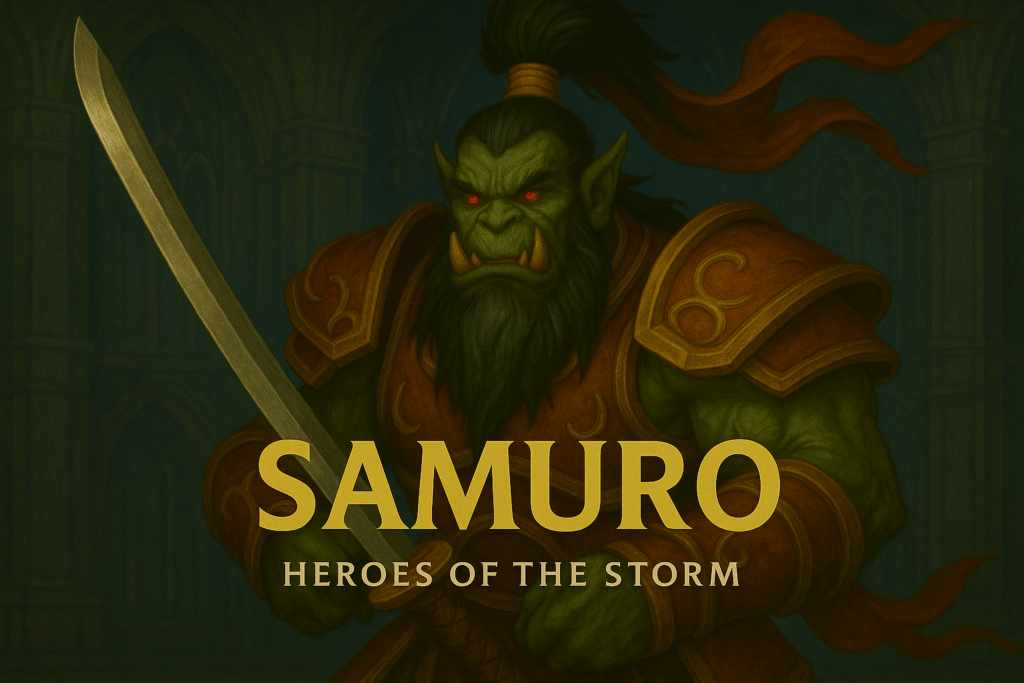
Hero Identity and Role Breakdown
Samuro is one of the most deceptive heroes in HOTS because his damage is only half the problem. The other half is the time and attention he steals. Illusions, swaps, and relentless lane pressure let him win duels, stretch rotations, and create objective imbalance without always having to take a clean 5v5. When played well, he feels less like one hero and more like three scheduling problems.
That only works if the deception is tied to value. If your clones are sloppy, your swaps are panic buttons, or your macro pressure never forces a real response, Samuro can look busy while accomplishing very little.
Samuro Abilities Explained
Image Transmission (Trait - D) Samuro can swap places with any of his Mirror Images at any time. Mirror Image (Q) Create two Mirror Images that last 18 seconds and fight alongside Samuro. Critical Strike (W) Samuro's next Basic Attack is guaranteed to critically hit for bonus damage. Wind Walk (E) Become Stealthed and gain movement speed; first attack out of stealth deals bonus damage. Bladestorm (R1) Samuro spins for 4 seconds, dealing damage to nearby enemies and becoming Unstoppable. Illusion Master (R2) Gain complete control over Mirror Images with individual health bars and ability usage.
Samuro is about making the enemy answer the wrong thing. The damage matters, but the hero becomes special when illusions, swaps, and side pressure keep buying him better fights than he should have.
How to Play Samuro (Step-by-Step)
- Use illusions to absorb information and cooldowns before your real body commits
- Pick side lanes and camps that force a real answer instead of just free spinning in place
- Swap bodies to preserve pressure, not just to escape once panic already started
- Take duels where the enemy cannot quickly call backup or clear your macro elsewhere
- Re-enter only when the enemy wasted enough time on the wrong target
How to Play Samuro Effectively
On the map, Samuro is at his best when every wave and every clone is creating an actual scheduling issue for the enemy. The point is not to be mysterious for its own sake. It is to make somebody answer a lane, a camp, or a body they would rather ignore. Once that starts happening, his macro pressure gets very real.
In fights, Samuro wins through confusion backed by honest damage. If clones draw the first reaction and the real body shows up at the right angle, the enemy suddenly has to solve target ID and duel pressure at the same time. That is why this hero can quietly win fights by making the other team spend too long answering the wrong problem.
Around objectives, Samuro often wins before the 5v5 even starts. A side wave, a camp timing, or a clone-pulled rotation can make the enemy arrive late or tilted. If they still force the fight, he gets to enter it after already buying the kind of chaos he likes.
The beginner-friendly version is simple: make the clone matter, make the side lane matter, and do not waste your swap until the enemy already committed to the lie.
In some games, Samuro can feel slippery without really carrying - that is normal. He starts taking over once the enemy keeps spending real time and real cooldowns on bodies that were never the actual problem.
Best Samuro Builds (Level 1 to 20)
Way of the Blade at level 1, Deflection at level 4, Burning Blade at level 7, Illusion Master at level 10, Kawarimi at level 13, Merciless Strikes at level 16, Three Blade Style at level 20
Gameplay Focus - Way of the Blade (Split-Push Master)
Split-Push Dominance, Solo Lane Control, Image Micro-Management
This build transforms Samuro into the ultimate split-push nightmare that forces enemies into impossible strategic decisions. Way of the Blade provides the foundation by giving your Mirror Images incredible scaling potential - each enemy hero killed permanently increases their damage by 15%, creating a snowball effect that makes your split-push increasingly unstoppable. Deflection gives you the survivability needed for aggressive split-pushing by providing spell armor and physical armor when enemies try to collapse on you. Burning Blade is the talent that truly enables your split-push dominance, adding a DoT component to your critical strikes that melts structures and minion waves alike. Illusion Master at 10 gives you complete control over your Images, allowing for complex multi-lane pressure that most teams cannot effectively counter. The build reaches its peak potential with Kawarimi at 13, which makes your Image swapping grant stealth, enabling incredible escape potential and gank setups. Merciless Strikes at 16 provides the damage scaling needed to threaten even tanky enemies, while Three Blade Style at 20 creates a version of Samuro that can literally be in three places at once, applying pressure that no team can fully address.
Way of the Blade : Images gain permanent damage scaling, making split-push increasingly powerful. Deflection : Spell and physical armor make you surprisingly survivable during collapses. Burning Blade : Critical strikes add DoT, accelerating structure damage and wave clear. Illusion Master : Complete Image control enables complex multi-lane strategies. Kawarimi : Image swapping grants stealth, providing incredible escape and engage potential. Merciless Strikes : Critical strikes reduce armor, making you a threat to all enemy types. Three Blade Style : Images can use abilities independently, creating true multi-presence.
Always have at least one Image pushing a different lane than where you're fighting. Use Image Transmission → Wind Walk for incredible escape sequences that confuse enemies. Stack Way of the Blade by participating in early teamfights before focusing on split-push. Control Images individually to maximize efficiency - don't just attack-move them. Use Kawarimi stealth to set up flanks and avoid detection while repositioning.
In short, You're the omnipresent threat that exists everywhere and nowhere . While enemies focus on one of you, the others are dismantling their base stone by stone.
This build looks miserable to play against on paper, but it loses value if the enemy can clear waves fast and never really chase the wrong body.
This wins games by turning every wrong response into more map pressure than the enemy can comfortably absorb.
Alternative Samuro Build (Level 1 to 20)
Way of the Wind at level 1, Deflection at level 4, Phantom Pain at level 7, Bladestorm at level 10, Shukuchi at level 13, Crushing Blows at level 16, Dance of Death at level 20
Gameplay Focus - Phantom Strike (Team Fighter)
Team Fight Presence, Burst Damage, Survivability
This build reimagines Samuro as a teamfight-focused assassin who uses his illusions for combat effectiveness rather than split-push pressure. Way of the Wind provides the foundation by making Wind Walk your primary engage and disengage tool, with reduced cooldown and increased damage that scales throughout the game. The synergy between your stealth mobility and Image positioning creates incredible teamfight opportunities where you can appear anywhere on the battlefield with devastating effect. Deflection remains crucial for survivability, but now serves to keep you alive during extended teamfights rather than split-push scenarios. Phantom Pain transforms your Wind Walk into a teamfight-defining ability, creating massive AoE damage zones that punish grouped enemies. Bladestorm becomes your teamfight ultimate, providing Unstoppable frames and sustained AoE damage that makes you incredibly threatening in close-quarters combat. The build truly shines with Shukuchi at 13, which gives Wind Walk a blink component that makes your positioning nearly unpredictable. Crushing Blows and Dance of Death complete the transformation into a teamfight monster capable of eliminating multiple enemies through superior positioning and sustained damage output.
Way of the Wind : Wind Walk cooldown reduction and damage scaling enable constant re-positioning. Deflection : Armor provides teamfight survivability during extended engagements. Phantom Pain : Wind Walk creates AoE damage zones that punish enemy grouping. Bladestorm : Unstoppable spinning provides teamfight presence and sustained damage. Shukuchi : Wind Walk gains blink, making your positioning completely unpredictable. Crushing Blows : Critical strikes become AoE, spreading damage across teamfights. Dance of Death : Bladestorm resets and gains mobility, enabling multi-kill chains.
Use Images to body-block skillshots and absorb initial focus fire. Wind Walk → Critical Strike → Phantom Pain is your standard engage combo. Position Images to force enemies into Phantom Pain zones during retreats. Save Image Transmission for escaping rather than engaging in teamfights. Use Bladestorm's Unstoppable frames to avoid CC during crucial moments.
In short, You're the whirling tempest that strikes from every angle . Enemies never know which shadow holds the real blade until it's already cutting through their ranks.
If the match keeps collapsing into direct fights, the alternative route gives Samuro much more honest teamfight presence instead of only side-lane value. In real fights, it lets the clone pressure bend the map first and then still cash out inside the brawl itself.
Common Player Mistake
Most Samuro players fail here. They use clones like decoration instead of decision pressure. In real matches, this is where Samuro starts taking over: when the illusion drew a cooldown, the lane forced a rotation, or the swap preserved pressure that should have ended. If none of that happened, the trick probably was not worth much.
If you ever feel useless on Samuro, it is usually because the map is not being stressed and the clones are not buying anything real before the fight begins.
Samuro is not just slippery. He is administrative pain, and good Samuro players make every answer feel late.
Real Match Situations
Two heroes rotate to stop your side pressure before objective. That is often a Samuro win already. If the fight starts uneven or late, the clones did their real job.
A target burns cooldowns on the wrong body. This is where Samuro turns clever into lethal. Once the answer is gone, the real duel gets much nastier.
The enemy stops chasing and just clears fast. That is the discipline check. Samuro still needs actual map value, not just theatrics.
One Thing to Know
Samuro wins plenty of games by making the enemy solve logistics badly before they ever solve the fight.
What Changes Through the Match
Early game Samuro is proving whether he can stress waves and duels without paying too much for it. Mid game, clone pressure and macro choices start forcing far uglier rotations. Late game, one bad answer to side pressure or one mistimed chase can decide the entire objective sequence immediately.
Advanced Tips
Always have at least one Image pushing a different lane than where you're fighting. This is often the decision that turns a tense fight into a 5v4 before the enemy even stabilizes.
Use Image Transmission → Wind Walk for incredible escape sequences that confuse enemies. Used one beat later, it punishes the answer so hard the enemy backline never resets cleanly.
Use Images to body-block skillshots and absorb initial focus fire. That is where mobility stops being flashy and starts deleting the one hero holding the fight together.
Wind Walk → Critical Strike → Phantom Pain is your standard engage combo. When the window is honest, this is what lets the hero snowball one kill into the whole fight.
Limitations
Samuro struggles when waveclear is instant, when the enemy refuses to chase and just plays the map cleanly, and when hard coordinated reveal or control removes the ambiguity that keeps him comfortable. He is great when the enemy has to make awkward choices and worse when they do not.
FAQ
When should I pick Samuro? Pick Samuro when the map rewards side pressure, when the enemy is likely to make bad rotation choices, or when you want a hero that can win through macro as much as through direct kills.
Is Samuro good in solo queue? Yes, if your macro is strong. Samuro is very playable in solo queue when you force bad answers and much less impressive when you only play for style points.
What should I focus on most in fights with Samuro? Focus on what each clone and each side wave is forcing the enemy to do next.
What is the biggest mistake on Samuro? The biggest Samuro mistake is mistaking confusion for value even when the map state never changed because of it.
What habit improves Samuro the fastest? The fastest improvement is learning to judge whether a clone sequence actually bought time, cooldowns, or macro pressure.
Related Guides
If you enjoy heroes that take over games in different ways, also check our Murky guide, Valeera guide, and Illidan guide.
Final Thoughts
Samuro becomes much more rewarding once you stop asking the hero to do everything at once and start leaning into what actually makes them special. If you master these fundamentals, Samuro becomes one of the most impactful heroes in Heroes of the Storm.