Quick Answer
If you are looking for the best Stukov build in HOTS and how to get more value out of his silence and healing spread, this guide breaks it down in a practical, real-match way. Stukov is a control healer who wins through zoning, delayed healing value, and some of the most fight-warping anti-cast pressure in the support role.
This guide helps you stop playing him like a pure healer and start using his silence, shove, and trait timing to make the enemy's best ideas fall apart.
He feels brutal when half the ground becomes illegal and the enemy still has to fight there anyway.
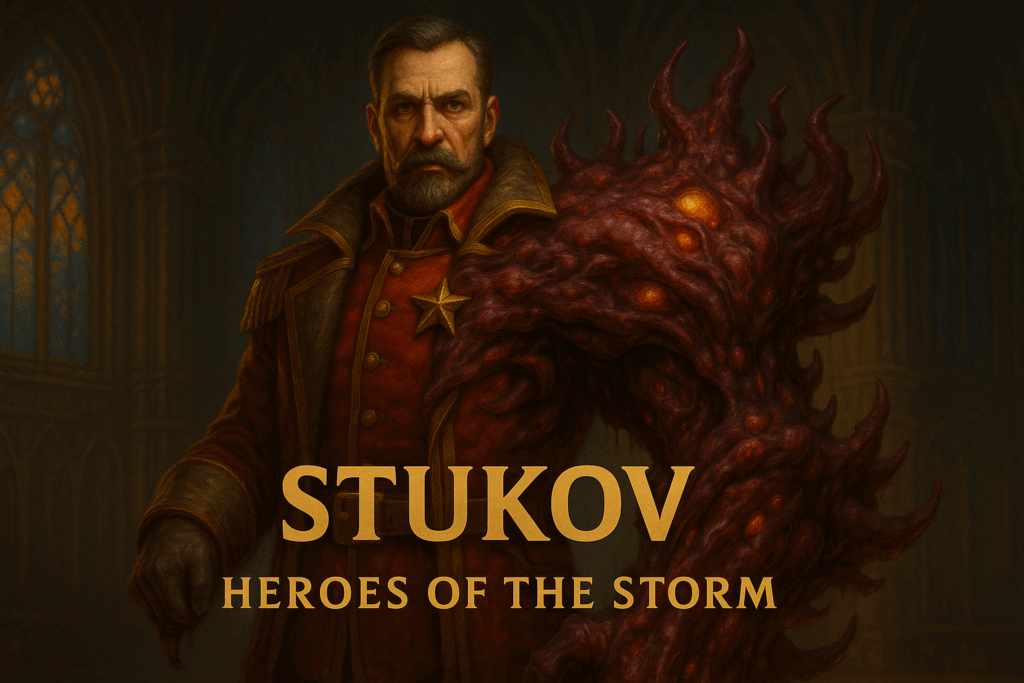
Hero Identity and Role Breakdown
Stukov is one of the nastiest supports in HOTS when the fight happens in real space. Healing Pathogen gives him layered sustain, Weighted Pustule and Lurking Arm punish movement and spellcasting, and his heroics can either shove a key target out of the fight or tear apart an entire engage. He is not subtle. He wants to make the ground itself a problem.
That power fades quickly if your timing is sloppy. If your arm lands late, if you detonate trait value too early, or if your shove is just displacement with no plan behind it, Stukov starts looking much softer than he really is. He becomes oppressive once every silence and every heal release is tied to the right second.
Stukov Abilities Explained
Bio-Kill Switch (Trait - D) Detonate your Healing Pathogen for instant burst healing. Healing Pathogen (Q) Infect an ally with healing over time that spreads to nearby allies. Weighted Pustule (W) Throw a pustule that slows and damages, spreading between enemies. Lurking Arm (E) Channel to extend an arm that silences enemies in a line. Flailing Swipe (R1) Swing your arm in a wide arc, shoving enemies away. Massive Shove (R2) Push target ally or enemy a long distance instantly.
Stukov's healing matters, but the hero becomes special when Healing Pathogen is already rolling before the silence and slow effects start making the enemy miserable.
How to Play Stukov (Step-by-Step)
- Focus on spreading Healing Pathogen efficiently among grouped allies
- Use Weighted Pustule to poke enemies and control minion waves
- Position safely before channeling Lurking Arm so the silence actually sticks
- Plan with your team when they're grouped to maximize pathogen spread
- Pre-spread Healing Pathogen before the real fight starts so the first burst hits into healing already in place
How to Play Stukov Effectively
In lane and in the early map phase, A lot of the value comes from spreading Healing Pathogen efficiently among grouped allies. The goal is to use Weighted Pustule to poke enemies and control minion waves. Position safely to channel Lurking Arm without interruption. It helps to coordinate with your team when they're grouped to maximize pathogen spread.
In teamfights, Pre-spread Healing Pathogen before fights begin for maximum coverage. The goal is to use Bio-Kill Switch timing to provide crucial burst healing moments. Channel Lurking Arm to silence key enemy abilities and ultimates. Position your heroic abilities to maximize team positioning advantages.
Around objectives, Spread healing among your team before major objective fights. The goal is to use Lurking Arm to control objective areas and deny enemy positioning. Weighted Pustule provides excellent area denial around objectives. Your heroic abilities excel at controlling objective fight positioning.
The beginner-friendly version is simple: spread your healing before the real damage starts, place silence where the enemy wants to cast next, and do not detonate your trait just because you can.
In some games, Stukov can feel awkward if fights never settle - that is normal. He takes over once one choke, one shrine, or one committed engage forces the enemy to stand in his actual area control.
Best Stukov Builds (Level 1 to 20)
Low Blow at level 1, Biotic Armor at level 4, Vigorous Reuptake at level 7, Flailing Swipe at level 10, Poppin' Pustules at level 13, Pox Populi at level 16, Bio-Explosion Switch at level 20
Gameplay Focus - Pathogen Spread Master
Healing Optimization, Spread Mechanics, Area Control
This build transforms Stukov into the ultimate area healing specialist, maximizing the effectiveness of his spreading mechanics while providing incredible sustain for teamfights. Low Blow enhances your Lurking Arm with additional utility, making it both a crowd control tool and setup mechanism for further abilities. Biotic Armor provides essential survivability while enhancing your healing output through armor buffs for affected allies. Vigorous Reuptake is the cornerstone talent that makes your Healing Pathogen incredibly powerful, providing mana return and extended duration that allows for constant team sustain. Flailing Swipe provides excellent area control and positioning tool for teamfights. Poppin' Pustules creates incredible area damage and control by making your Weighted Pustules spread more effectively. Pox Populi enhances your pathogen spreading significantly, making your healing coverage nearly unavoidable. Finally, Bio-Explosion Switch provides game-changing burst healing potential that can save your entire team in crucial moments.
Low Blow adds root utility to Lurking Arm, creating setup opportunities for team follow-up. Biotic Armor provides survivability and enhances healing through armor buffs for allies. Vigorous Reuptake creates mana sustainability and extended pathogen duration for constant healing. Flailing Swipe offers area control and positioning manipulation in teamfights. Poppin' Pustules enhances area damage and control through improved pustule spreading. Pox Populi makes pathogen spreading nearly guaranteed in grouped situations. Bio-Explosion Switch provides massive burst healing potential for game-changing moments.
Manage Vigorous Reuptake stacks to maintain constant mana and pathogen uptime. Use Low Blow root to set up allied abilities and control key enemy positioning. Time Bio-Explosion Switch for maximum impact during crucial teamfight moments. Position to spread pathogens and pustules through optimal enemy and ally clustering.
In short, You're the Biological Warfare Expert . Control teamfights through superior spreading mechanics while keeping your team constantly sustained.
This build gets much stronger the more the enemy has to stay connected, but it loses bite when the fight keeps breaking apart before your spread and silence can matter.
This wins ugly objective fights where the enemy has to keep standing in exactly the space you already ruined.
Alternative Stukov Build (Level 1 to 20)
Reactive Ballistospores at level 1, Targeted Excision at level 4, It Hungers at level 7, Massive Shove at level 10, Lingering Spines at level 13, Superstrain at level 16, Push Comes To Shove at level 20
Gameplay Focus - Tactical Displacement Control
Crowd Control, Tactical Positioning, Enemy Disruption
This build focuses on maximizing Stukov's crowd control and tactical positioning capabilities, turning him into a master of battlefield manipulation who can completely disrupt enemy formations while maintaining strong utility. Reactive Ballistospores provides excellent area damage and crowd control through enhanced pustule mechanics. Targeted Excision makes your Lurking Arm incredibly powerful by providing damage and extended silence duration. It Hungers creates self-sustain and enhanced area control through improved arm mechanics. Massive Shove becomes your primary tool for tactical positioning, allowing for incredible playmaking potential through enemy displacement or ally repositioning. Lingering Spines adds powerful crowd control to your basic attacks, making you dangerous in close combat. Superstrain enhances your spreading mechanics significantly while providing additional utility. Push Comes To Shove transforms your heroic into a game-changing ability that can completely alter teamfight dynamics through multiple displacements.
Reactive Ballistospores provides area damage and crowd control through enhanced pustule spreading. Targeted Excision makes Lurking Arm a devastating damage and control tool. It Hungers creates self-sustain and enhanced area control through arm improvements. Massive Shove offers incredible tactical positioning and playmaking potential. Lingering Spines adds crowd control to basic attacks for close-combat effectiveness. Superstrain enhances spreading mechanics while providing additional utility options. Push Comes To Shove creates multiple displacement opportunities for teamfight control.
Use Massive Shove for both offensive and defensive positioning plays. Combine Targeted Excision with team follow-up for elimination potential. Position Reactive Ballistospores to maximize area damage and crowd control. Time Push Comes To Shove for maximum teamfight disruption potential.
In short, You're the Master Tactician . Control battlefield positioning through superior displacement abilities while disrupting enemy formations completely.
This becomes terrifying when one shove or one silence angle breaks the structure of the entire engage.
If one shove angle lands cleanly, this version can delete the enemy's whole fight structure in a second.
If Weighted Pustule or the silence lands at the right moment, this version can shut a fight down on the spot.
Common Player Mistake
Most Stukov players fail here. They drop their silence where the enemy is instead of where the enemy still needs to cast, and they pop their healing before it is really buying anything. In real matches, this is where Stukov starts taking over: once the fight stops being theoretical and bodies actually have to occupy the same space. If the enemy tank is already in or the choke is already contested, that is your real arm timing.
If you ever feel useless on Stukov, it is usually because your silence is not covering meaningful cast space or your healing spread is arriving too late to compound.
Stukov does not win because he tops healing charts. He wins because half the ground becomes illegal.
Real Match Situations
A shrine or narrow objective becomes crowded. This is exactly where Stukov starts feeling unfair. The more bodies have to stay connected, the more his silence and spread healing take over.
A diver commits past their tank line. Sometimes the best answer is not more healing. It is making the diver's follow-up impossible with silence or shove.
An enemy tries to channel or cast inside your control zone. That is when Stukov turns from sustain healer into direct denial. One correct arm can invalidate the whole plan.
One Thing to Know
Stukov is at his best when the fight has nowhere clean left to happen.
What Changes Through the Match
Early game Stukov is proving whether his heal spread and lane pressure can create small edges before objectives start forcing bodies together. Mid game, his silence zones become much more decisive. Late game, one massive shove or one properly placed arm can end a fight instantly because the enemy has no time to recover from bad space control anymore.
Advanced Tips
Manage Vigorous Reuptake stacks to maintain mana and Pathogen uptime through longer fights. That is where the hero starts controlling the floor instead of merely reacting on it.
Use Low Blow root to set up allied follow-up once enemies are already slowed or cornered. Used on the real path, it forces enemy players to make the bad choice now, not later.
Use Massive Shove for both offensive picks and defensive resets, depending on who overcommitted first. This is how one zone tool starts winning space instead of just looking annoying.
Combine Targeted Excision with team follow-up so the silence becomes a kill window instead of just disruption. Done at the right second, it makes the next cast or movement check feel impossible.
Limitations
Stukov can feel weaker when enemies refuse to group, when fights keep resetting before his slow-building value appears, or when he is forced to throw silence reactively into open space with no terrain or choke helping him. He wants commitment, not endless drift.
FAQ
When should I pick Stukov? Pick Stukov when the map or draft naturally creates clustered fights and when the enemy relies on casting from predictable positions.
Is Stukov good in solo queue? Yes, especially if you like controlling space and slowing fights down on your terms. He rewards patience more than panic.
What should I focus on most in fights with Stukov? Focus on placing silence where the enemy still needs to act, not where they happened to be one second ago.
What is the biggest mistake on Stukov? The biggest Stukov mistake is using his silence as a visual reaction instead of as a predictive denial tool.
What habit improves Stukov the fastest? The fastest improvement is learning to pre-spread healing before the real fight window begins.
Related Guides
If you enjoy support heroes that solve fights in different ways, also check our Ana guide, Deckard Cain guide, and Whitemane guide.
Final Thoughts
Stukov becomes much more rewarding once you stop asking the hero to do everything at once and start leaning into what actually makes them special. If you master these fundamentals, Stukov becomes one of the most impactful support picks in Heroes of the Storm.