Quick Answer
If you are looking for the best Butcher build in HOTS and how to snowball with him without inting the early game, this guide breaks it down in a practical, real-match way. The Butcher is a melee assassin who wins through patient meat stacking, brutal punish windows, and all-in engages that can delete one hero so fast the rest of the fight never recovers.
This guide helps you stop charging blindly on Butcher and start using his timing, target priority, and snowball patterns where they actually decide matches.
He feels strongest when one enemy finally oversteps and suddenly the whole game starts smelling like free meat.
Hero Identity and Role Breakdown
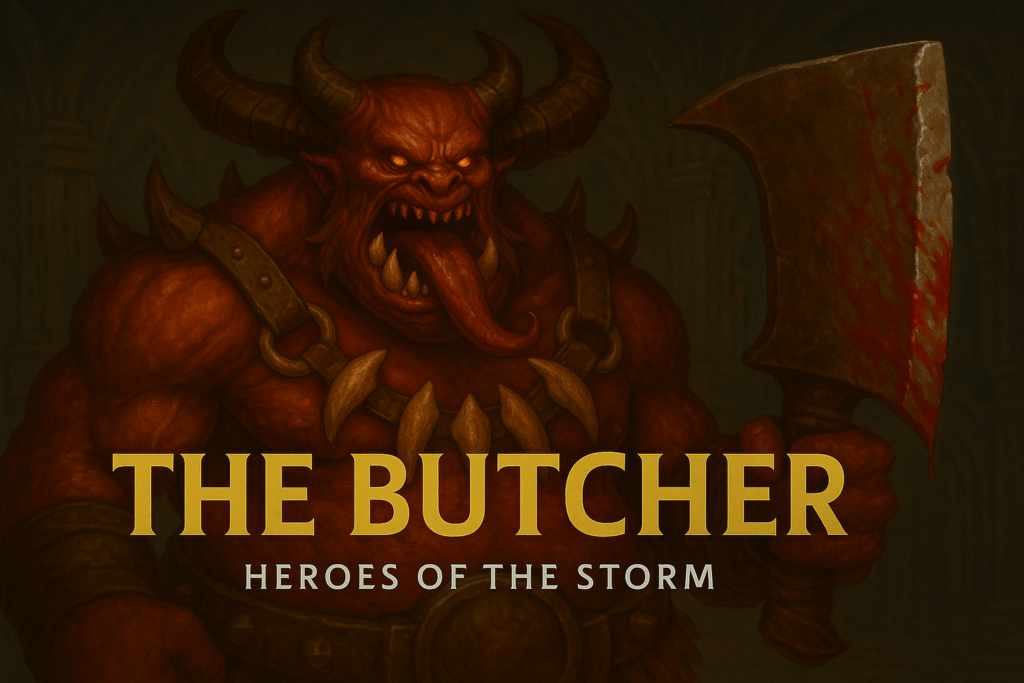
The Butcher is one of the clearest feast-or-famine heroes in HOTS, but the feast part is very real. Once his meat stack is online and one target gets marked for a real engage, he can erase backliners and force panic from supports almost instantly. Few heroes punish one positioning mistake with more violence.
The trap is that bad Butcher play is just impatience in heavy armor. If you charge through untouched peel, force fights before your stack timing matters, or tunnel on the wrong target, the hero becomes the easiest way in the game to gift the enemy momentum.
The Butcher Abilities Explained
Fresh Meat (Trait - D) Killing minions and heroes grants permanent Attack Damage; quest completed at 200 stacks. Hamstring (Q) Charge to target enemy, dealing damage and slowing them significantly. Butcher's Brand (W) Mark an enemy hero; attacks against marked targets heal The Butcher and extend the duration. Ruthless Onslaught (E) Charge to target enemy hero, stunning them and nearby enemies on impact. Furnace Blast (R1) After a delay, deal massive damage to all enemies in a large area. Lamb to the Slaughter (R2) Chain an enemy hero to a post, preventing them from moving far from that location.
The Butcher is built around choosing the right all-in. The charge matters, but the hero becomes terrifying only when the marked target is truly unsupported enough that the full burst gets to finish the job.
How to Play The Butcher (Step-by-Step)
- Stack meat safely first so your first real charge actually matters
- Charge only targets your silence, team, or follow-up can realistically keep pinned
- Hold the engage when blinds, stuns, or peels are still obviously waiting for you
- Pick the isolated backliner or overextended frontliner whose support line already broke
- Back out of the fantasy if the first lock did not become a kill window
How to Play The Butcher Effectively
In lane and in the early map phase, Butcher is all about earning the right to become terrifying later. That means collecting meat without donating your body for a maybe-kill that never had real support behind it. If you respect that patience, the midgame starts feeling much more explosive.
In teamfights, he wins through one committed punish, not through vague frontline presence. Once the charge lands on a target that cannot actually peel him off or be saved in time, the whole fight can flip immediately. This is absolutely a hero that wins fights by itself when one engage is clean enough.
Around objectives, Butcher gets stronger when the battleground compresses movement and oversteps become more expensive. Shrines, turn-ins, and clustered objective starts all give him cleaner reads on who is truly punishable. That is where the hero stops looking coin-flippy and starts looking inevitable.
The beginner-friendly version is simple: stack first, charge second, and never confuse being able to reach a target with being allowed to kill it.
In some games, Butcher can feel weak early because everything punishes him - that is normal. He starts taking over once the meat stack is meaningful and the first honest target finally forgets how fast he can end a fight.
Best The Butcher Builds (Level 1 to 20)
Chop Meat at level 1, Insatiable Blade at level 4, Flail Axe at level 7, Lamb to the Slaughter at level 10, Savage Charge at level 13, Enraged at level 16, Nexus Blades at level 20
Gameplay Focus - Blood Frenzy (Hypercarry Monster)
Maximum Scaling, Single Target Elimination, Late Game Dominance
This build transforms The Butcher into the ultimate late-game hypercarry who becomes virtually unstoppable once his quest completes and his scaling talents come online. Chop Meat provides crucial early game sustainability by allowing minion kills to heal The Butcher, making the dangerous quest completion phase significantly safer. This talent is essential for surviving the vulnerable early game where The Butcher is essentially a walking gold bag for enemy assassins. Insatiable Blade amplifies your Brand healing dramatically, turning marked enemies into health fountains that make you nearly impossible to kill in extended fights. Flail Axe transforms your basic attacks into cleaving weapons, allowing you to melt grouped enemies while maintaining your single-target focus. Lamb to the Slaughter becomes your primary engagement tool, guaranteeing kills on isolated targets while providing setup for your team. The build reaches its terrifying peak with Savage Charge at 13, which makes your Ruthless Onslaught reset its cooldown on enemy hero kills, enabling chain engagements that can wipe entire teams. Enraged at 16 provides the attack speed needed to maximize your Fresh Meat scaling, while Nexus Blades at 20 adds the raw damage to delete even the tankiest enemies.
Chop Meat : Minion kills provide healing, making quest completion safer and more sustainable. Insatiable Blade : Massive Brand healing turns marked enemies into health batteries. Flail Axe : Cleaving attacks allow multi-target pressure while maintaining focus. Lamb to the Slaughter : Guarantees eliminations and provides team setup potential. Savage Charge : Ruthless Onslaught resets enable chain kills across teamfights. Enraged : Attack speed amplifies Fresh Meat scaling and Brand healing efficiency. Nexus Blades : Raw damage increase makes even tanks vulnerable to elimination.
Never engage without Butcher's Brand active - the healing is crucial for survival. Complete Fresh Meat quest by level 13 at the latest for proper scaling. Use E → W → Q combo to lock down targets and maximize sticking power. Save Ruthless Onslaught for securing kills rather than initial engagement when possible. Farm jungle camps aggressively post-10 to accelerate quest completion.
In short, You're the ravenous beast that devours everything in its path . The longer the game goes, the more inevitable your dominance becomes as you feast on fresh meat.
This build looks disgusting on paper, but it falls apart if the enemy keeps blinds and hard peel cleanly aligned against every engage.
This wins fights instantly when one charge turns into a dead carry before the support line can respond.
Alternative The Butcher Build (Level 1 to 20)
Victuals at level 1, Cheap Shot at level 4, Brutal Strike at level 7, Furnace Blast at level 10, Spell Shield at level 13, Crippling Slam at level 16, Slaughterhouse at level 20
Gameplay Focus - Victuals (Sustain Bruiser)
Survivability, Team Fighting, Crowd Control
This build reimagines The Butcher as a more team-oriented bruiser who prioritizes survivability and crowd control over pure damage scaling. While still dependent on Fresh Meat completion, this version focuses on staying alive in teamfights and providing utility rather than seeking perfect isolation scenarios for eliminations. Victuals provides incredible healing potential by making Butcher's Brand spread to nearby enemies, turning teamfights into massive healing opportunities rather than single-target affairs. This approach acknowledges that perfect isolation scenarios are rare in coordinated play, instead focusing on sustained teamfight presence. Cheap Shot adds crucial crowd control to your kit, making your Hamstring a proper engage tool rather than just a gap closer. Brutal Strike provides percentage-based damage that scales against all enemy types, ensuring your relevance even against high-health targets. Furnace Blast becomes your teamfight ultimate, providing massive area damage that forces enemies to respect your zone control. The build's defensive nature shines with Spell Shield at 13, providing crucial protection against burst mages, while Crippling Slam at 16 turns you into a crowd control machine. Slaughterhouse at 20 creates a version of The Butcher that can actually improve throughout death, making even failed engagements beneficial for future attempts.
Victuals : Brand spreads create massive healing opportunities in teamfights. Cheap Shot : Hamstring becomes proper engage tool with stun component. Brutal Strike : Percentage damage ensures relevance against all enemy types. Furnace Blast : Area damage ultimate provides teamfight presence and zone control. Spell Shield : Crucial protection against burst damage and ability-based threats. Crippling Slam : Ruthless Onslaught becomes crowd control tool with area slow. Slaughterhouse : Death becomes beneficial, reducing respawn time and boosting damage.
Use Victuals spread to heal off multiple enemies during teamfights. Furnace Blast zones enemies away from objectives and creates space for your team. Cheap Shot makes Hamstring a viable engage tool - use it to initiate rather than follow up. Focus on surviving teamfights rather than securing perfect eliminations. Spell Shield timing is crucial - save it for predicted burst attempts.
In short, You're the relentless berserker who grows stronger through battle . Death is temporary, but the hunger for flesh is eternal, and each fight makes you deadlier than before.
If the enemy can survive the first engage more often, the alternative route gives Butcher more staying power and a better chance to keep mauling after the opener. In real fights, that extra stickiness is often what keeps the kill chain going after the first charge lands.
Common Player Mistake
Most Butcher players fail here. They charge because the button is available, not because the target is actually doomed. In real matches, this is where Butcher starts taking over: after peel is gone, after the path narrowed, or after the support moved too far from the body you want. If Johanna still has blind and Brightwing is still right there, it is usually bait.
If you ever feel useless on Butcher, it is usually because you are charging access instead of charging certainty.
Butcher is not a random diver. He is a verdict, and good Butcher games make every greedy step feel punishable.
Real Match Situations
An enemy carry drifts forward to finish the objective race. That tiny greed check is where Butcher looks terrifying. If the support line is late by even one second, the fight can end there.
Your team lands one short stun on a priority target. That is often all Butcher needs. One brief stop can turn a fair fight into a feeding frenzy very quickly.
The enemy is still holding blind and hard peel for you. This is the warning sign. Butcher looks much worse when he charges into answers that were never spent.
One Thing to Know
Butcher does not need many good engages. He needs one target that the enemy lied to themselves about being safe.
What Changes Through the Match
Early game Butcher is proving whether he can stack without falling behind the whole map. Mid game, his first real power windows start changing how cautiously carries can position. Late game, one clean charge can decide everything because a single dead carry is often all the room he needs.
Advanced Tips
Never engage without Butcher's Brand active - the healing is crucial for survival. This is often the sequence that decides the fight before the support line can even answer.
Complete Fresh Meat quest by level 13 at the latest for proper scaling. Used on the real punish window, it turns one caught target into a full numbers swing immediately.
Use Victuals spread to heal off multiple enemies during teamfights. That is what makes the combo feel lethal instead of merely clean.
Furnace Blast zones enemies away from objectives and creates space for your team. When it lands on time, the enemy usually loses the fight before they can re-form.
Limitations
Butcher struggles into repeated blinds, disciplined peel, and teams that never offer a real isolated target. He is monstrous when the engage is honest and very clumsy when it is not.
FAQ
When should I pick The Butcher? Pick Butcher when the enemy has punishable backliners, when your team can help lock a target down, or when the battleground creates tight objective fights with obvious oversteps.
Is The Butcher good in solo queue? He can work in solo queue, but only if you are patient. Butcher is strong when you charge certainty and terrible when you charge vibes.
What should I focus on most in fights with The Butcher? Focus on the target whose peel and support coverage actually broke. That is usually where Butcher wins the whole fight.
What is the biggest mistake on The Butcher? The biggest Butcher mistake is treating range as permission even when the full kill pattern was never real.
What habit improves The Butcher the fastest? The fastest improvement is learning which anti-dive cooldown has to disappear before your charge belongs in the fight.
Related Guides
If you enjoy heroes that take over games in different ways, also check our Illidan guide, Kerrigan guide, and Valeera guide.
Final Thoughts
The Butcher becomes much more rewarding once you stop asking the hero to do everything at once and start leaning into what actually makes them special. If you master these fundamentals, The Butcher becomes one of the most impactful heroes in Heroes of the Storm.