Quick Answer
Thrall is a practical bruiser who mixes roots, burst, and self-healing into strong skirmish control. This guide covers the best Thrall build, practical gameplay tips, and real-match decisions that matter when you actually want to win with the hero.
If you want an offlaner that can punish bad spacing without giving up lane stability, Thrall still does that job extremely well.
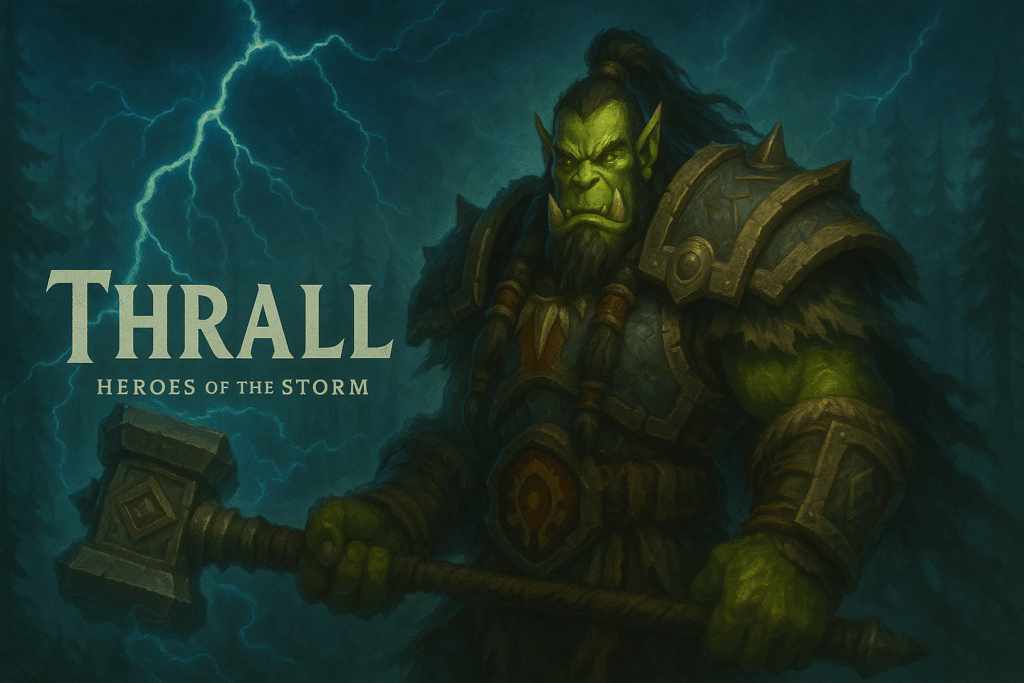
Thrall is not a pure diver and not a pure poke hero. He is strongest in the middle distance, where one root or one Windfury step turns a normal trade into something the enemy cannot cleanly answer.
Hero Identity and Role Breakdown
Thrall is not a pure diver and not a pure poke hero. He is strongest in the middle distance, where one root or one Windfury step turns a normal trade into something the enemy cannot cleanly answer.
Most weak Thrall games come from rushing cooldowns. He gets much more dangerous when each spell is creating the next spell's hit, not when everything is thrown at once.
Thrall Abilities Explained
Frostwolf Resilience (Trait – D) Dealing damage with abilities heals Thrall for a percentage of damage dealt. Chain Lightning (Q) Deals damage to target and bounces to nearby enemies, dealing reduced damage with each bounce. Feral Spirit (W) Summons a spirit wolf that travels forward, slowing and damaging the first enemy hero hit. Windfury (E) Next 3 basic attacks have increased attack speed and deal additional damage. Sundering (R1) Creates a massive fissure that damages and displaces enemies in a line. Earthquake (R2) Creates a large area that continuously slows and damages enemies inside.
Feral Spirit is the key setup tool, Chain Lightning keeps pressure flowing, and Windfury is what lets Thrall turn positioning mistakes into real burst.
How to Play Thrall (Step-by-Step)
- Use Chain Lightning to keep pressure and control the wave without overcommitting.
- Walk up when Frostwolf Resilience is ready to pay you back for the trade.
- Use Feral Spirit when the root actually creates follow-up, not just to tag someone.
- Save Windfury for the moment you either secure damage or leave safely.
- Take the heroic that matches whether the fight needs a split or a slow trap.
How to Play Thrall Effectively
In lane, Thrall is about repeated, efficient trades. You poke, step in when trait value is ready, and make the enemy respect your root angle every time they get greedy.
In skirmishes, Feral Spirit is the spell that changes everything. If it lands when your team can move, it creates kill pressure immediately. If it lands into empty space, it is just noise.
Thrall also scales well with patience. He often looks stronger the second time he enters a fight than the first, because his trait and cooldown rhythm reward measured re-entry.
The practical rule is simple: do not chase forever after the first root. Thrall wins when he keeps the exchange tidy enough to benefit from his own sustain.
In some games, you'll feel like Thrall is doing a lot of small things without really taking over - that's normal. The hero often flips from quiet to oppressive the moment one rooted target turns a small skirmish into a fight the enemy can no longer reset cleanly.
Best Thrall Builds (Level 1 to 20)
This primary Thrall build focuses on steady poke, repeated root pressure, and Earthquake control so even small trades can snowball into a fight the enemy can no longer leave cleanly.
Gameplay Focus - Sustained Root Control
Pick this when your team wants reliable skirmish pressure and the enemy cannot comfortably ignore your root windows.
The build works by making every Feral Spirit and every close-range trade more punishing over time.
It wins fights by forcing melee heroes and short-range carries to keep respecting the same root threat over and over.
In short, this build is best when you want the cleanest version of Thrall in the kinds of fights the hero already prefers.
This build looks strong on paper, but it loses a lot of bite if the enemy disengages well and your roots never force anyone to stay where the damage matters.
There are games where this build looks smooth on paper and still feels awful in practice because one clean disengage ruins the whole Windfury window. When that keeps happening, Thrall has to play the choke and the re-engage instead of pretending he is a full dive hero.
Alternative Thrall Build (Level 1 to 20)
Maelstrom Weapon at level 1, Frostwolf Pack at level 4, Ancestral Wrath at level 7, Sundering at level 10, Frostwolf's Grace at level 13, Alpha Wolf at level 16, Wind Rush at level 20
Gameplay Focus - Burst Commit Thrall
Pick this when you have follow-up damage and one root should turn directly into a kill attempt.
This path is about sharper entries, harder punish, and faster reward when someone mispositions.
It is the better choice when your team can cash in immediately instead of grinding out a long brawl.
In short, this build is best when the game asks Thrall to solve a slightly different problem than the default path.
Common Player Mistake
Most Thrall players fail here. They throw Feral Spirit on cooldown instead of waiting for a path the enemy actually has to take. In real matches, this is where Thrall starts to take over: one rooted target forces the whole fight to slow down on his terms. If Valla has already used Vault or the enemy has to walk through a choke, that is your real root window.
If you ever feel useless on Thrall, it's usually because your roots are hitting the nearest body instead of the target whose movement actually matters.
Real Match Situations
A mage drifts into root range after using mobility. That is the real Thrall moment. You do not need a long chase. You need one clean root and instant follow-up.
You took a short trade and both heroes backed off. This is usually fine for Thrall if trait value was good. Small wins stack hard on this hero.
The enemy starts an objective fight in a choke. That is where your heroic can make the whole fight easier for your team to read.
One Thing to Know
Thrall feels strongest when his cooldowns land in sequence, not when they are spent just to feel active.
What Changes Through the Match
Early game Thrall is about efficient lane trades and root threat. Mid game is where one good Feral Spirit starts deciding full skirmishes. Late game, heroic timing matters much more because your root or split tool often decides whether your team gets a clean entry or not.
Advanced Tips
Root where people want to step. Good Feral Spirits punish the path the enemy is about to take.
Windfury is also an exit tool. If you spend it carelessly on entry, Thrall loses one of the cleanest ways he has to reset a trade.
Trait value changes bad trades into good ones. Pay attention to how many stacks and hits are about to pay you back before you overreact.
The big split does not need five people. Cutting one support from one carry is often enough to win the entire fight.
Limitations
Thrall can absolutely carry skirmishes, but long-range poke, repeated blinds, and teams that refuse to stand where his root matters can strip a lot of his value away. He is powerful when the map keeps compressing fights and much less comfortable when every engagement stays loose.
FAQ
When should I pick Thrall? Pick Thrall when you want a safe offlaner with real kill threat, especially into shorter-range heroes that have to respect root angles.
Is Thrall good in solo queue? Yes, especially when you play for repeatable value instead of highlight moments. The hero gets much stronger once you solve real map and fight problems instead of pressing buttons just to stay active.
When should I take Sundering over Earthquake? Take Sundering when one clean split or pick can decide the fight on the spot. Take Earthquake when the game is more about trapping multiple enemies in bad space and grinding them down over time.
What is the biggest mistake on Thrall? The biggest mistake is burning Feral Spirit at low-value moments and then having no real setup when the fight actually opens.
What habit improves Thrall the fastest? The fastest improvement is learning how often you can win a trade without chasing past your own sustain window.
Related Guides
If you enjoy bruisers that take over games in different ways, also check our Sonya guide, Dehaka guide, and Varian guide.
Final Thoughts
Thrall is strongest when the game is asking exactly the kind of question this hero is built to answer. If you master these fundamentals, Thrall becomes one of the most useful bruisers in Heroes of the Storm.